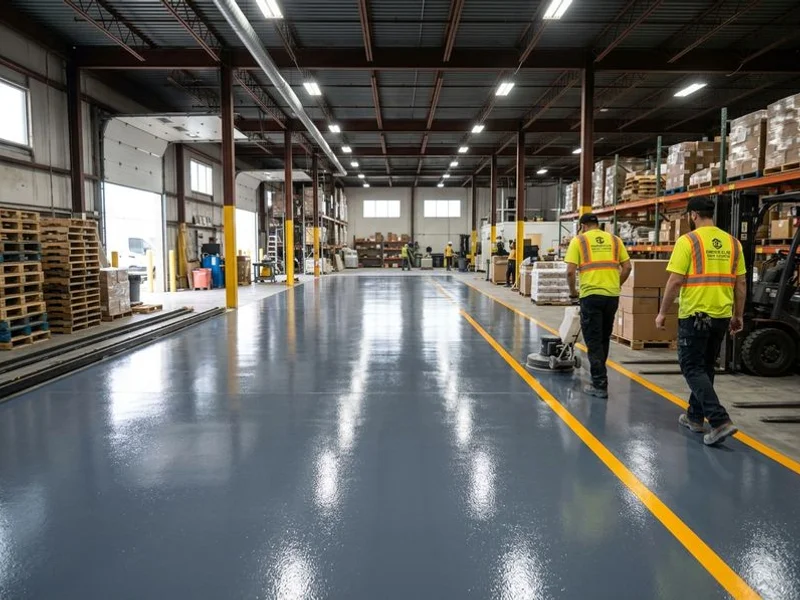
Toronto Elite Epoxy Flooring: Freezer Floor, Cold Room, and Cryogenic Coating Systems for Commercial & Industrial
Toronto Elite Epoxy Flooring installs polyurea, polyaspartic, and cementitious urethane floor systems for walk-in cold rooms, blast freezer floors, refrigerated warehouse slabs, food processing cold storage, and pharmaceutical cold chain facilities throughout Toronto, ON. Every cold environment floor installation uses CSP 3 surface preparation, ASTM F2170 moisture verification before slab entry into refrigerated service, and thermal-shock-rated chemistry validated for continuous operation at -40°C with rapid cycling between ambient and cryogenic temperatures.
Freezer and cold storage floors present a combination of failure modes that standard epoxy systems cannot survive. At -20°C to -40°C continuous service, standard 100% solid epoxy becomes brittle and loses the elasticity required to move with the concrete slab - thermal contraction and freeze-thaw cycling at existing slab cracks propagate delamination within 6-18 months of service. Rapid temperature cycling (blast freezer: -35°C chamber entry after ambient loading) induces thermal shock that standard coatings fail by interlaminar fracture. Polyurea systems with 300-400% elongation at -30°C are the only coating chemistry rated for continuous below-freezing service combined with thermal shock cycling. CFIA Recommended Code of Practice (RCP) 2019 requires seamless, non-porous, and thermally stable floor surfaces in federally inspected food establishment freezer areas - standard broadcast flake or troweled mortar systems with open joints do not comply.
Cold storage floor projects typically run 1,000-20,000 sq ft and complete in phased sections to maintain refrigerated operations throughout the installation. Pricing ranges from $8 to $15 per sq ft installed depending on temperature rating, thermal shock specification, and floor drainage detailing. Installation records and product technical data sheets are provided with every project.
Toronto Elite Epoxy Flooring provides cold storage and freezer epoxy flooring to Toronto, ON and surrounding Ontario cities, including Mississauga, Brampton, Vaughan, Etobicoke, Scarborough, North York, Markham, Richmond Hill, Oakville, Burlington, Hamilton, Ajax, Pickering, Whitby, and Oshawa.
Cold Storage & Freezer Epoxy Flooring in Toronto
Toronto Elite Epoxy Flooring installs polyurea and cementitious urethane floor systems for walk-in cold rooms, blast freezers, refrigerated warehouses, and food processing cold storage facilities across Toronto and the GTA. Our polyurea floor coatings with 300-400% elongation at -30°C are the only systems rated for continuous cryogenic service combined with the thermal shock cycling that causes standard epoxy to delaminate in 6-18 months.
What Is Cold Storage Epoxy Flooring?
Cold storage and freezer epoxy flooring refers to thermally stable, elastomeric floor coating systems designed for continuous service at -10°C to -40°C. Standard epoxy becomes brittle below freezing and cannot withstand thermal shock or freeze-thaw cycling. Polyurea systems with sub-zero elongation ratings are the industry standard for blast freezer and cold chain facility flooring.
What Does a Freezer Floor System Include?
- CSP 3 diamond-ground surface preparation (done during warm-up period)
- ASTM F2170 moisture verification on warmed slab
- Polyurea or polyaspartic base coat (thermal shock rated)
- Non-skid aggregate for forklift traction at sub-zero temperatures
- Thermal contraction joint detailing at slab control joints
- CFIA RCP 2019 compliance documentation (for federally inspected facilities)
How Much Does Cold Storage Epoxy Flooring Cost in Toronto?
Cold storage and freezer epoxy flooring runs $8-$15 per sq ft installed in Toronto and the GTA, depending on temperature rating, thermal shock specification, and compliance documentation required. Most projects run 1,000-20,000 sq ft.
Performance Demands in Cold Environments
We design and install coatings that maintain structural integrity and hygiene under extreme cold conditions. Our approach focuses on flexible chemistry, moisture control, and compliance with food and pharmaceutical safety requirements that standard coatings cannot meet.
Thermal Shock Resistance and Temperature Cycling
Cold storage environments, blast freezers, and cryogenic rooms experience rapid temperature cycling. Traditional industrial epoxy flooring becomes brittle below -10°C and fractures when subjected to sudden thermal shock. We address this with polyurea systems that maintain 300-400% elongation at -30°C and provide seamless joint bridging when the concrete slab contracts.
Our polyurea formulations offer service ratings down to -40°C, ensuring consistent performance in walk-in coolers, refrigerated warehouses, and ice arenas throughout Mississauga, Etobicoke, and the GTA’s major logistics corridors. These coatings maintain adhesion during constant freeze-thaw cycles. By integrating expansion and contraction joints into the coating design, we eliminate the delamination and cracking that compromise sanitation and safety in active cold facilities.
CSP 3 diamond grinding provides the surface profile for strong mechanical adhesion on cold slabs - the starting point that every other step depends on.
Handling Moisture, Condensation, and Vapour Barriers
Condensation on frozen slab surfaces leads to moisture entrapment beneath coatings, causing blistering and debonding during defrost cycles. We use moisture-tolerant primers formulated to adhere directly to cold, damp concrete - a requirement that standard epoxy primers, which need fully dry substrates, cannot meet.
Before installation, we perform ASTM F2170 moisture testing to evaluate in-slab humidity and ensure vapour pressure remains within acceptable limits. When readings exceed the threshold, we apply a vapour mitigation layer that prevents osmotic blistering during defrost cycles.
For warehouse epoxy applications in high-humidity receiving zones, our systems balance permeability and barrier performance to maintain a consistent bond line. The combination of mechanical surface prep and vapour control is what separates a freezer floor that lasts 15-20 years from one that delaminates in 18 months.
Safety and Hygiene in Food and Pharmaceutical Facilities
Hygienic flooring is mandatory where condensation, organic residues, and temperature fluctuations create bacterial risk. Our commercial epoxy flooring and CFIA RCP 2019-compliant systems form a dense, non-porous surface that prevents microbial absorption and withstands repeat exposure to quaternary disinfectants, caustic cleaning agents, and sanitation cycles.
We install coved base transitions at all wall junctions to eliminate 90-degree angles where contaminants accumulate - a detail that is particularly critical in Brampton food processing cold rooms and Vaughan pharmaceutical refrigerated storage areas where CFIA and Health Canada inspections are routine.
All projects are handled by WSIB-certified crews with $2M liability coverage, ensuring workplace safety and regulatory compliance throughout the installation.
Advanced Epoxy and Polyaspartic Flooring Solutions
We apply industrial epoxy and polyaspartic systems engineered for extreme cold, rapid return to service, and continuous sanitation. Each system maintains performance under sub-zero thermal cycling, forklift abrasion, and moisture exposure common to cold storage and cryogenic facilities.
Polyaspartic Topcoat and Rapid-Cure Systems
Our polyaspartic topcoat technology provides a dense, non-porous seal that resists chemical attack and prevents microbial absorption. It enables rapid cure at low temperatures, allowing installations to proceed in walk-in freezers and refrigerated production zones without full shutdown. These coatings reach handling strength within hours, reducing downtime for operations that require temperature-controlled continuity.
We apply polyaspartic systems over a CSP 3 diamond-ground substrate to maximise adhesion and surface uniformity. Using a moisture-tolerant primer for cold slab condensation, we eliminate bond failure that can result when ambient humidity condenses on chilled concrete. The result is a continuous, seamless film compliant with CFIA RCP 2019 food processing requirements where hygiene and fast turnaround are critical.
Polyurea Versus Standard Epoxy in Freezer and Cryogenic Service
Polyurea flooring delivers superior flexibility and tensile elongation - 300-400% even at -30°C. This capacity allows the system to absorb contraction stresses that crack standard epoxy. Traditional epoxy coating exhibits brittle fracture below -10°C, making it unsuitable for cryogenic storage or blast freezer flooring.
Our polyurea systems are rated to -40°C cryogenic service, maintaining adhesion to prepared concrete under both mechanical shock and thermal cycling. Epoxy, while durable under ambient industrial conditions, lacks this elasticity. Polyurea retains high bond strength and tolerance for temperature swings, making it the correct specification wherever floor movement and frost-line variability are present.
Thermal Contraction Joint Bridging Technologies
When concrete substrate temperatures drop well below freezing, joints contract and expand unpredictably. We use polyurea joint fillers with high elongation to form a flexible bridge capable of absorbing these movements without delamination or cracking. Conventional rigid fillers fail in these conditions, leading to spalling and open joints that trap bacteria in food-grade facilities.
Our installation process includes ASTM F2170 moisture testing to confirm internal humidity levels before priming. Each joint and edge receives tailored reinforcement, ensuring continuous protection across slab boundaries.
| Feature | Function | Typical Temperature Range |
|---|---|---|
| Polyurea Joint Filler | Bridges contraction joints | down to -40°C |
| Moisture-Tolerant Primer | Prevents bond loss on cold slabs | below 0°C |
| Polyaspartic Topcoat | Seals surface, fast cure | -20°C and above |
Specialized Preparation and Installation Methods
We follow precise preparation and installation protocols to ensure every cold storage epoxy floor performs under extreme thermal stress, condensation, and constant temperature cycling.
Diamond Grinding and Surface Profiling (CSP 3)
We start every freezer floor installation with CSP 3 diamond grinding to create a consistent texture that promotes mechanical bonding. This process removes surface contaminants, laitance, and sealers that prevent adhesion in subzero environments. Grinding also improves epoxy and polyurea penetration, minimising the risk of delamination in areas subject to freeze-thaw cycles.
We verify profile consistency across the slab using depth gauges and standardised visual comparators. In food-grade and pharmaceutical zones, vacuum attachments maintain air quality while safeguarding adjacent refrigeration units. After grinding, we conduct in-slab relative humidity checks following ASTM F2170 standards to confirm moisture conditions are acceptable for coating application.
Crack Repair and Substrate Priming
We address all visible and subsurface cracking before primer application using epoxy or flexible polyurea repair materials compatible with low-temperature service. In areas of repeated thermal cycling, polyurea’s 300-400% elongation performance enables thermal contraction joint bridging without fracture - essential near freezer door thresholds and expansion joints.
We use a moisture-tolerant primer formulated to bond on damp or frosted substrates. Standard epoxy primers become brittle below -10°C, but our systems remain workable and cure predictably in cold ambient conditions. This ensures minimal downtime between milling, priming, and topcoat application across operational cold rooms, blast freezers, and cryogenic zones.
Phased Installation - Cold Chain Maintained
All epoxy application work adheres to strict jobsite safety procedures and WSIB certification standards. Our phased installation method ensures food and pharmaceutical cold chain integrity by isolating sections during coating and cure stages while adjoining zones remain at operating temperature.
Temperatures and humidity are logged in adjacent zones throughout the project. We enforce clear operational separation between grinding, coating, and curing activities to prevent cross-contamination. Low-odour and VOC-compliant products minimise disruption to sensitive refrigerated environments and the products stored within them.
Commercial and Industrial Applications Across Sectors
Our cold storage flooring systems serve environments where temperature control, hygiene compliance, and structural durability cannot be compromised. We design polyurea and polyaspartic solutions that maintain adhesion, flexibility, and safety in settings ranging from food processing to pharmaceutical cold chain.
Warehouse and Distribution Freezers
In Toronto-area logistics hubs, warehouse epoxy flooring must withstand heavy forklift traffic, pallet rack loading, and sub-zero continuous operations. We install commercial-grade polyurea and hybrid polyurea-polyaspartic coatings formulated for impact resistance and frost resilience. Compared to standard epoxy that exhibits brittle fracture below -10°C, our polyurea systems maintain 300-400% elongation at -30°C.
A moisture-tolerant primer bonds effectively on cold slabs where condensation typically prevents standard primer adhesion. This allows phased installations that keep warehouse operations and the cold chain intact throughout. CSP 3 diamond grinding and ASTM F2170 moisture testing are performed on each warmed slab section before coating begins.
Mississauga and Etobicoke distribution centres frequently use low-temperature polyaspartic coatings for their fast recoat times and minimal downtime - the right choice when a 24-hour cold chain operation cannot accommodate extended cure windows.
Food Processing Cold Rooms and Blast Freezers
Food plants require finishes that meet CFIA RCP 2019 hygiene standards while resisting chemical cleaners, fat, brine, and acidic food residues. We install CFIA-compliant commercial epoxy flooring in processing rooms, spiral freezers, and blast tunnels operating at -20°C or below. Our polyurea chemistry bridges thermal contraction joints, preventing cracks or delamination that trap bacteria in environments under constant CFIA scrutiny.
We use topcoats rated for cryogenic service down to -40°C, ensuring continuous performance when freezer doors cycle repeatedly through ambient loading periods. Slip resistance and cleanability are adjusted by aggregate texture and coving profiles, allowing flooring that meets both sanitation and forklift safety requirements for national food distributors and export-registered processing plants.
Pharmaceutical Storage, Ice Arenas, and Cryogenic Facilities
Refrigerated pharmaceutical storage and vaccine distribution centres rely on floors that maintain structural integrity under temperature stratification and humidity variation. Our systems bond to cold concrete with moisture-tolerant primers and tolerate condensation from defrost cycles without osmotic blistering near loading docks or walk-in chambers.
Ice arenas across the GTA use polyaspartic rapid-cure systems that allow resurfacing within hours, minimising disruption to ice scheduling. We apply sealers that resist de-icing salt exposure, skate impact, and repeat cleaning agents. For cryogenic storage facilities, we specify polyurea with -40°C service ratings for predictable performance at extreme low temperatures where standard coatings have no rated performance data.
Long-Term Value, Compliance, and Maintenance
We design cold-environment epoxy flooring systems to perform under continuous refrigeration cycles, load traffic, and chemical sanitation schedules. The chemistry and installation techniques we use ensure floors stay safe, compliant, and serviceable for years without costly shutdowns.
Durability and Life Expectancy Under Cold Conditions
Cold storage areas expose flooring to thermal shock, heavy pallets, and condensation. Our industrial epoxy flooring and polyurea systems maintain flexibility and adhesion where standard epoxies become brittle below -10°C. Polyurea coatings with 300-400% elongation at -30°C bridge thermal contraction joints without stress cracks that would otherwise propagate under traffic.
Moisture-tolerant primers prevent delamination - the most common failure mode in freezer environments. Floors with a polyaspartic topcoat cure rapidly at low temperatures, avoiding extended downtime in walk-in coolers or cryogenic rooms where every hour of shutdown costs money.
In high-traffic warehouse epoxy applications, properly specified and installed polyurea floors can exceed 15-20 years of service with maintenance recoating at 8-12 year intervals for heavily trafficked blast freezer areas.
CFIA, Food Safety, and Industry Compliance
Our flooring systems for food, pharmaceutical, and cold storage facilities follow CFIA RCP 2019 hygiene and cleanability requirements. We use seamless installations that eliminate crevices where bacteria can grow and confirm compatibility with sanitation chemicals, caustic cleaners, and cleaning detergents used in federally inspected facilities.
ASTM F2170 relative humidity testing before installation prevents moisture drive from compromising hygiene or coating adhesion. Systems in food-grade freezers meet slip resistance and thermal expansion criteria under CFIA and health inspection audits. We maintain WSIB certification and $2M liability coverage on every project, with full documentation delivered at handover.
Maintenance, Cleaning, and Repair Strategies
We specify coatings that simplify routine sanitation and repair. Seamless flooring eliminates grout lines, reducing cleaning time and eliminating harbourage points that create recurring sanitation citations. Smooth polyurea and polyaspartic finishes tolerate repeat exposure to degreasers, quaternary disinfectants, and low-temperature steam cycles.
Routine maintenance involves CSP 3 diamond grinding preparation for patching and recoating zones of heavy wear. Damaged areas can be re-primed with fast-cure polyaspartic resin in under eight hours, minimising cold chain disruption. For freezer floors in ice arenas or cryogenic storage rooms rated to -40°C, we recommend inspection every 12-18 months to check joint performance and compression loading at high-traffic zones. This scheduled upkeep extends operational lifespan and preserves the seamless surface required by CFIA and internal food safety audits.
Related Questions Toronto Cold Storage Operators Ask
Why do standard epoxy floors fail in walk-in freezers while polyurea doesn’t?
The failure mechanism is thermal brittleness combined with concrete movement. Standard epoxy - even 100% solids formulations - loses flexibility below -10°C. When the slab contracts at freezing temperatures and the concrete joints move, the rigid epoxy film cannot flex with the movement and fractures at the weakest points: existing cracks, control joints, and perimeter edges. Polyurea has 300-400% elongation even at -30°C, so it moves with the slab rather than fracturing. This is why every blast freezer floor that failed in 6-18 months with standard epoxy can be rebuilt correctly with polyurea and last 15+ years under identical service conditions.
What happens if you skip the warm-up period before installing a freezer floor?
Bond failure. Cold concrete below +5°C prevents proper primer adhesion, regardless of the primer type. The coating appears to bond during application but fails at the bond line within weeks once the floor returns to operating temperature - usually at the most mechanically stressed points first (joint edges, door thresholds, forklift turn zones). The warm-up period is 48-72 hours minimum, section by section, and ASTM F2170 moisture testing on the warmed slab is the verification step before any coating is applied. Skipping either step accounts for most of the cold storage floor failures we’re called to assess and replace.
Can Mississauga or Brampton food plants get CFIA compliance documentation from the floor installer?
Yes - and they should require it. CFIA RCP 2019 compliance documentation includes the product technical data sheet confirming the coating is non-porous and impermeable, the installation record confirming seamless application with coved junctions and no open joints, and the material traceability records confirming no hazardous substances were introduced to the food contact zone. We provide this documentation package as standard on every food plant project. Facilities that receive CFIA inspection citations for flooring deficiencies without this documentation have no evidence the installation met the code requirements at the time of installation.
How are ice arena floors different from blast freezer floors?
Ice arena floors are typically at -5°C to -10°C - colder than a standard walk-in cooler but warmer than a blast freezer. The primary demands are skate impact resistance, de-icing salt exposure, and fast resurfacing with minimal downtime between ice times. We use polyaspartic rapid-cure systems for ice arena corridors and dressing rooms because polyaspartic reaches handling strength within 2-4 hours, allowing resurfacing between ice rentals. Blast freezer floors at -30°C to -40°C require polyurea with higher elongation ratings and more careful warm-up protocol. Ice arenas across North York and Scarborough are typically on an annual resurfacing cycle for the walking surfaces adjacent to the ice.
What is the realistic service life difference between polyurea and standard epoxy in a -20°C distribution freezer?
In a -20°C continuous service distribution freezer with daily forklift traffic: standard epoxy typically delaminates at control joints and high-stress areas within 6-18 months. The brittleness failure is accelerated by the temperature combined with the mechanical loads. Polyurea in the same environment lasts 12-20 years before requiring a maintenance recoat cycle. The cost difference in chemistry is recovered many times over by eliminating the repeat installations that standard epoxy requires. The Mississauga and Etobicoke distribution centres we’ve worked in that previously cycled through standard epoxy every 12-18 months have been on the same polyurea floor for 8+ years at time of writing.
Cold Storage Epoxy Pricing
Temperature rating and thermal shock specification affect final price.
Why GTA Customers Choose Toronto Elite Epoxy Flooring for Cold Storage Epoxy
Polyurea Chemistry, Not Standard Epoxy
We specify polyurea with 300-400% elongation at -30°C for freezer environments. Standard epoxy loses flexibility below -10°C and delaminates within 6-18 months in cold service. Our systems are the only chemistry rated for continuous cryogenic service combined with thermal shock cycling.
Moisture-Tolerant Primers for Cold Slabs
Cold slab condensation prevents standard epoxy primers from bonding correctly. We use moisture-tolerant formulations that adhere on damp and frosted substrates, combined with ASTM F2170 in-situ moisture testing before any coating application.
CFIA RCP 2019 Compliance Included
Every food processing and pharmaceutical cold room installation includes CFIA compliance documentation for federally inspected facility audits. Seamless coving, joint detailing, and material traceability are standard - not add-ons.
Cold Chain Maintained Throughout Install
Section-by-section phased installation keeps most of the freezer operational while work proceeds. Temperature and humidity are logged in adjoining zones throughout to protect temperature-sensitive products.
How Cold Storage Epoxy Works
Temperature Zone Assessment
We review your facility's temperature range, freeze-thaw cycle frequency, CFIA compliance requirements, and forklift load profile before selecting between polyurea, polyaspartic, or cementitious urethane.
Warm-Up & CSP 3 Surface Prep
Coordinate refrigerated section warm-up to +5°C minimum for 48-72 hours, then CSP 3 diamond grinding, ASTM F2170 moisture testing, and crack repair with flexible polyurea filler before any primer.
Phased Cold-Chain-Safe Application
Moisture-tolerant primer, polyurea or polyaspartic base coat, non-skid aggregate, and thermal contraction joint detailing applied in section-by-section shifts while remaining facility sections maintain refrigerated service.
CFIA Compliance Documentation
Product technical data sheets, temperature service rating certificates, CFIA RCP 2019 compliance documentation, ASTM F2170 moisture test logs, and installation records provided at handover.
Ready for a Free On-Site Assessment?
Same-day quotes across the GTA. WSIB-certified, $2M liability on every project.
What Customers Say About Our Cold Storage Epoxy
"We operate a refrigerated distribution warehouse in Mississauga and our blast freezer floors had been delaminating every 18 months - standard epoxy was failing at the control joints every time. Toronto Elite specified polyurea with the correct elongation rating, detailed all the thermal contraction joints properly, and did the whole install in phased overnight sections so we never had to shut the freezer down. The floor has held through two full winter cycles without a single crack."
"Food processing plant in Brampton with CFIA inspection requirements on our blast tunnel floors. Toronto Elite knew exactly what CFIA RCP 2019 required - seamless coving, no open joints, the right documentation. They warmed the floor section by section, did the CSP 3 prep, and applied the polyurea system overnight. Our CFIA inspector reviewed the floor and the documentation package and had no comments. First time we've passed floor inspection without a citation."
"Pharmaceutical cold chain facility in Vaughan, refrigerated storage at -20°C. We needed compliance documentation for our temperature-sensitive product storage area and a floor that could handle the condensation cycles when the loading dock doors open in summer. Toronto Elite moisture-tested the slab properly, used the right primer for the cold concrete, and delivered the full CFIA documentation at handover. No coating failures after 18 months of heavy pallet jack and forklift use."
Cold Storage Epoxy FAQs
What coating is used for freezer floors?
Freezer floors below -10°C require polyurea or polyaspartic systems with 300-400% elongation at sub-zero temperatures. Standard 100% solid epoxy loses flexibility at freezing temperatures, causing brittle fracture and delamination under thermal shock. Polyurea systems maintain elasticity and adhesion at -40°C continuous service and withstand rapid temperature cycling from ambient to cryogenic temperatures, which is the primary failure mode for blast freezer floors.
How should thermal contraction joints be bridged in blast freezers and walk-in coolers?
Thermal contraction joints in freezer floors require flexible polyurea joint fillers - not rigid epoxy mortar - with sufficient elongation to absorb concrete movement as the slab contracts at operating temperature. We detail each joint and edge with reinforced flexible sealant that sits flush to the floor surface, eliminating ridges that trap debris or moisture. For food and pharmaceutical environments, the joint interface is coved and sealed to maintain wash-down compatibility without creating sanitation risks or trip hazards.
How can condensation on a cold slab be managed during installation?
We manage slab condensation by coordinating facility warm-up to +5°C minimum for 48-72 hours before installation and using localised dehumidification where needed. When residual moisture cannot be fully eliminated, we apply moisture-tolerant primers formulated to adhere under damp and frosted substrate conditions. These primers are essential for facilities that cannot fully shut down refrigeration - they prevent bond failure from film curing over condensation that defeats standard epoxy primer adhesion.
What ASTM F2170 readings indicate elevated risk for coating failure on refrigerated slabs?
We follow ASTM F2170 in-situ relative humidity testing on every cold storage project, performed after the slab has been warmed and allowed to equilibrate for 48 hours. Readings above 80% RH typically indicate elevated risk for osmotic blistering or bond failure under impermeable coatings. When we detect elevated results, we apply vapour mitigation primers or extend the warm-up period until the slab equilibrates to within the coating manufacturer's tolerance. These test results are logged and included in the compliance documentation package.
Can epoxy be applied to a cold storage slab that is already in refrigerated service?
Yes, but the slab must be warmed to a minimum of +5°C for a minimum of 48-72 hours before installation and during the curing period. We coordinate a section-by-section warm-up and installation schedule that keeps most of the freezer space in operation throughout the process. ASTM F2170 moisture verification is performed on the warmed slab before application to confirm moisture vapour levels are within coating tolerances.
How much does cold storage epoxy flooring cost in Toronto?
Cold storage and freezer epoxy flooring runs $8-$15 per sq ft installed in Toronto and the GTA, depending on the temperature rating, thermal shock cycling specification, and floor drain detailing. Most cold storage projects run 1,000-20,000 sq ft. CFIA-compliant seamless systems for federally inspected facilities may add 10-15% to the base system cost for documentation and compliance verification.
Does cold storage flooring need to comply with CFIA requirements?
Yes, for federally registered establishments under the Safe Food for Canadians Regulations (SFCR). The CFIA Recommended Code of Practice (RCP) 2019 requires food contact zone and freezer floors to be seamless, non-porous, impermeable, thermally stable, and cleanable. Grout lines, broadcast flake with open voids, and standard concrete all fail this requirement. Our polyurea systems are supplied with the compliance documentation required for CFIA inspection.
How long does cold storage epoxy flooring last?
A properly installed polyurea floor system in cold storage service lasts 10-20 years depending on temperature cycling frequency, forklift traffic intensity, and cleaning protocol. The elastomeric chemistry prevents the brittle fracture and delamination that causes standard epoxy failure in freezer environments. Maintenance recoats at 8-12 years are typically required for heavily trafficked blast freezer floors.
Can freezer floors be repaired rather than fully replaced?
Yes, if the delamination is localised and the existing system has sufficient adhesion in the bonded areas. We assess the existing floor condition with pull tests and grind-and-re-coat the failed sections with compatible polyurea chemistry. Full replacement is recommended when delamination exceeds 30% of the floor area or when the existing system is standard epoxy that has become brittle.
Related Services
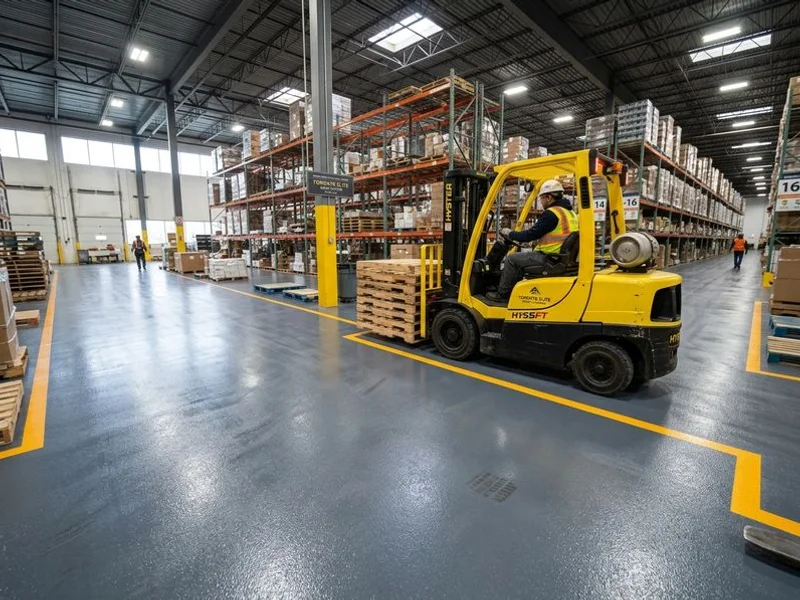
Industrial Epoxy Flooring in Toronto, Ontario
Heavy-duty industrial epoxy flooring for manufacturing plants, warehouses, food processing facilities, chemical storage areas, and automotive service operations in Toronto and the GTA. 80-100 mil broadcast systems rated for Class 1-3 forklift traffic, 12,000+ lb point loads, and chemical spill environments. Pricing from $3 per sq ft for open-plan warehouse epoxy to $18 per sq ft for novolac chemical-resistant systems. WSIB-certified, $2M liability, full compliance documentation.
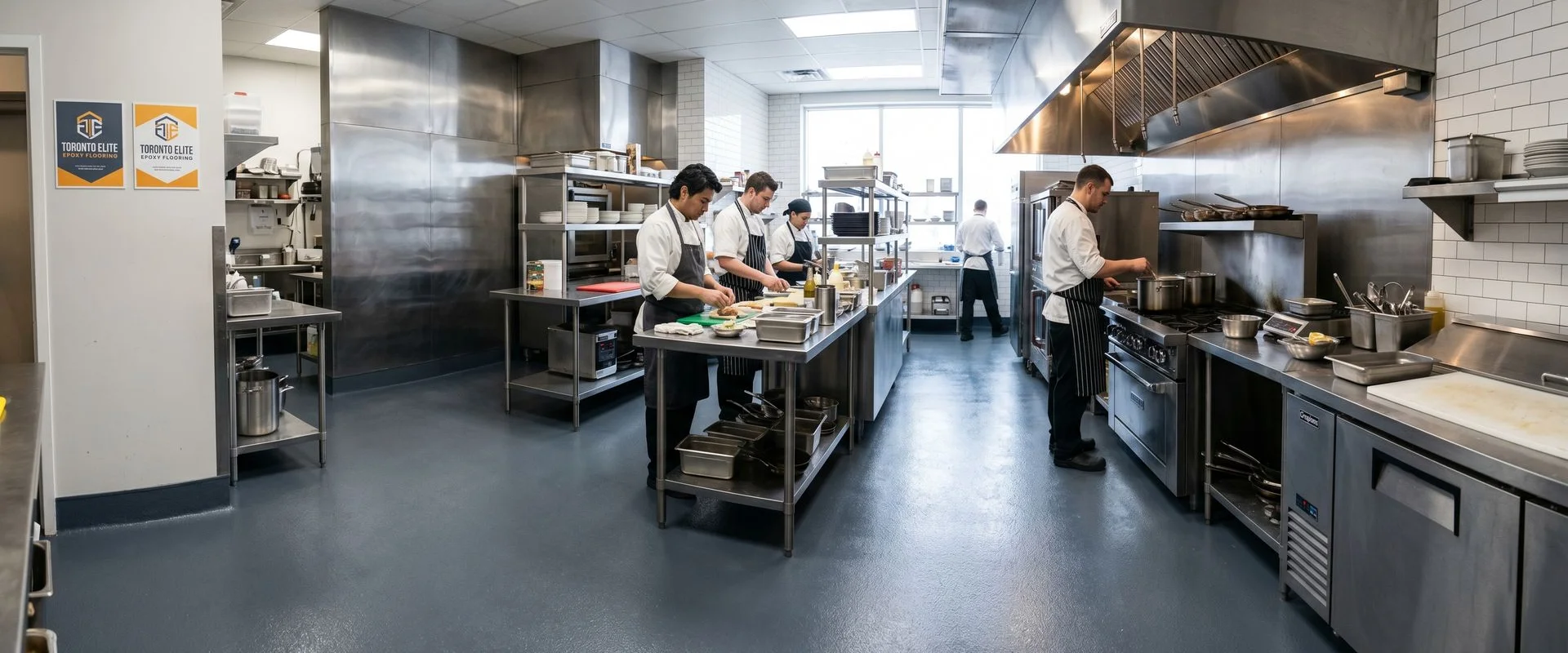
Commercial Kitchen Epoxy Flooring in Toronto, ON
CFIA-compliant seamless epoxy flooring with 4-6 inch coving, quartz anti-slip broadcast, and zero-VOC chemistry for Toronto restaurants and food service facilities. Pricing runs $5-$11 per sq ft installed; most commercial kitchens complete in 2 overnight shifts with no service disruption. Every install includes full health inspection compliance documentation and off-hours scheduling.
Wash Bay & Washdown Epoxy Flooring in Toronto, Ontario
High-pressure washdown-rated polyurea and urethane cement floor systems for truck wash bays, fleet maintenance facilities, food plant washdown areas, and industrial cleaning stations in the GTA. Resistant to hot water, pressure washing, alkaline degreasers, and petroleum products. Pricing runs $7-$12 per sq ft installed. WSIB-certified with $2M liability on every project.
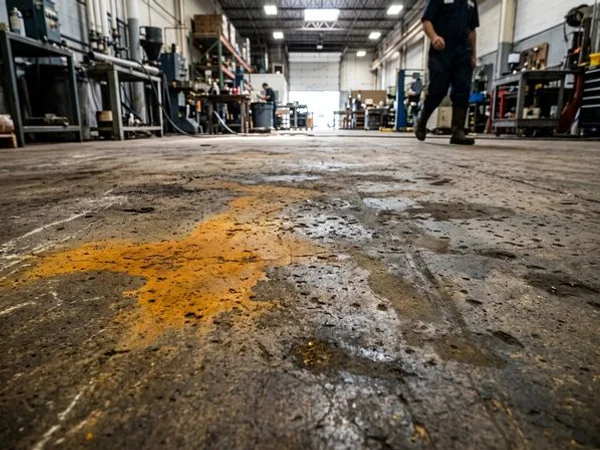
Secondary Containment Coatings in Toronto, Ontario
TSSA-compliant secondary containment coatings for fuel tank berms, chemical storage areas, transformer pads, and industrial spill containment floors in Toronto and the GTA. Novolac and vinyl ester systems rated for concentrated chemical and petroleum immersion. Pricing runs $10-$18 per sq ft installed. WSIB-certified, $2M liability, and full compliance documentation on every project.
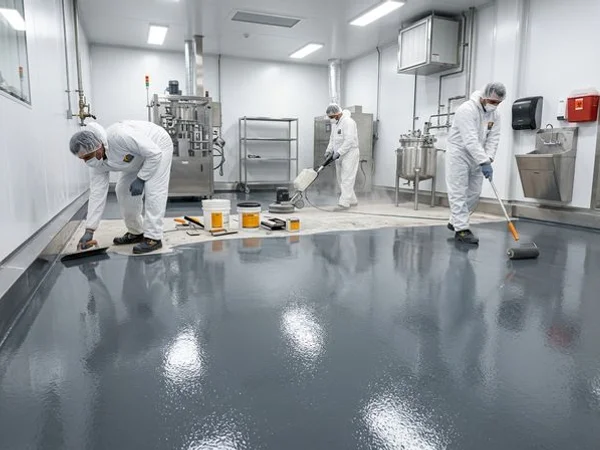
Pharmaceutical Cleanroom Epoxy Flooring in Toronto, Ontario
ISO 5-8 classified cleanroom epoxy systems with novolac chemical-resistant base coats, ESD-dissipative topcoats, and zero-particle-emission chemistry for GMP pharmaceutical and compounding pharmacy facilities in the GTA. Pricing runs $12-$20 per sq ft installed; off-hours phased scheduling maintains cleanroom integrity throughout. WSIB-certified crews with $2M liability and full GMP compliance documentation on every project.
Ready to Book Cold Storage Epoxy?
Same-day free on-site assessment. WSIB-certified, $2M liability on every project.