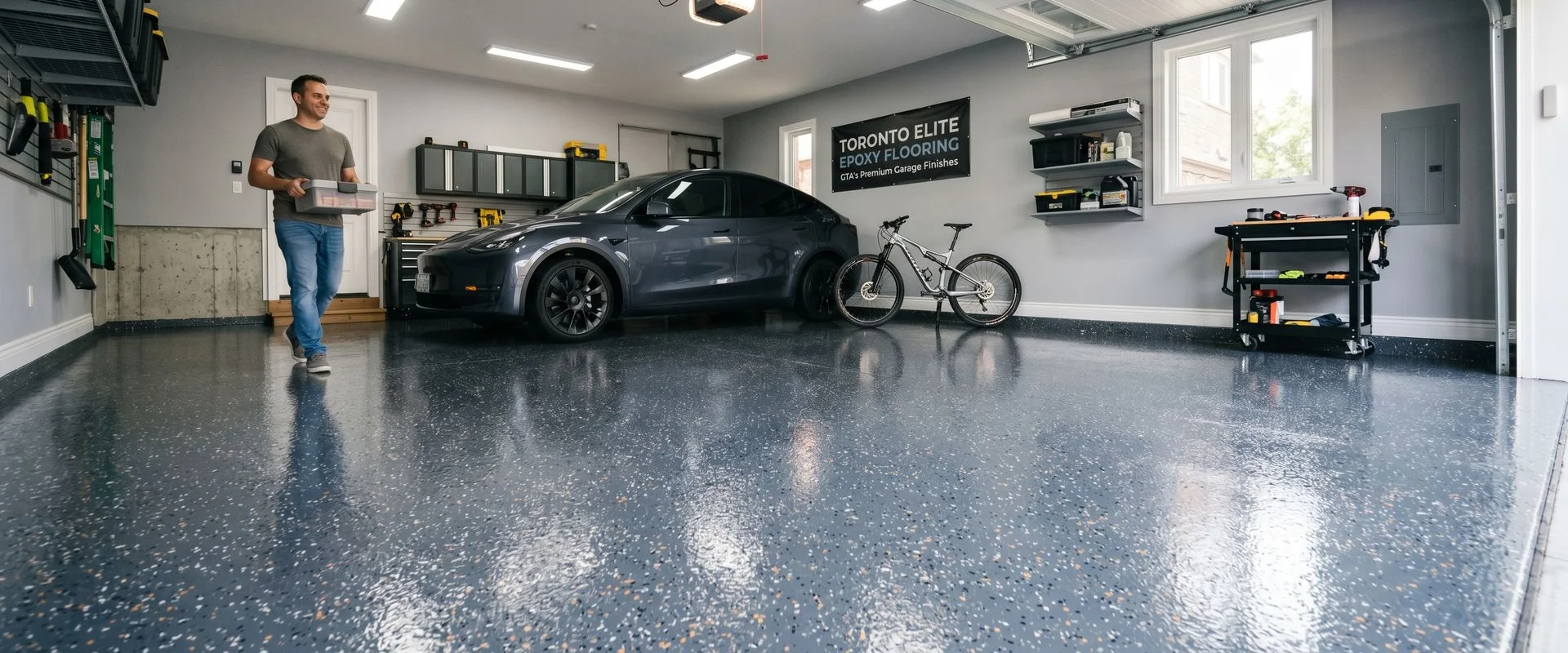
Polyaspartic Floor Coating in Toronto, ON - Fast-Cure UV-Stable Floor Professionals
Toronto Elite Epoxy Flooring installs diamond-ground polyaspartic base and topcoat systems for residential garages, basements, and commercial floors throughout Toronto, ON. Every polyaspartic install uses CSP 2-3 surface preparation, a 100% solid polyaspartic base coat, decorative vinyl flake or quartz broadcast, and a high-build topcoat rated for cold-weather curing down to -20°C - making it the right choice for year-round installation in Ontario.
Standard epoxy systems applied in Ontario face a cure window problem most contractors don't disclose. Epoxy cures poorly below 10°C - in a Toronto garage that means a 4-6 month installation blackout from November through March when slab temperatures drop to 5-8°C. Polyaspartic aliphatic chemistry cures to vehicle traffic hardness in 3-6 hours at -20°C with no cold-weather inhibition, and the aliphatic molecular chain eliminates the UV yellowing that converts standard aromatic epoxy topcoats from clear to amber within 12-18 months under Ontario summer sun and LED retail lighting.
A standard garage (400 sq ft) returns to vehicle traffic in 24 hours; basement and commercial floors are walkable the same day. Pricing ranges from $3.50 to $7 per sq ft installed depending on flake density, topcoat thickness, and substrate condition. Polyaspartic out-performs standard epoxy topcoats on UV stability - no amber yellowing under Ontario summers.
Toronto Elite Epoxy Flooring provides polyaspartic floor coatings to Toronto, ON and surrounding Ontario cities, including Etobicoke, Scarborough, North York, Mississauga, Oakville, Vaughan, Brampton, Markham, Richmond Hill, Burlington, Ajax, and Pickering.
What is Polyaspartic Floor Coating?
Polyaspartic is a fast-cure aliphatic polyurea coating chemistry. It bonds to concrete (or over an epoxy base), cures in about 24 hours, stays UV-stable without yellowing, and can be applied at lower temperatures than standard epoxy.
For Toronto garages, we most often use polyaspartic as a clear topcoat over our 100% solid epoxy base with broadcast quartz flake - the epoxy gives the floor its body and bond, and the polyaspartic gives it UV stability and fast return-to-service. It’s the finish on most of our garage floor epoxy systems and a core part of what we offer as Toronto’s full-spectrum epoxy flooring contractor. It’s also a strong stand-alone choice for light commercial floors where downtime matters.
Lifespan is comparable to a full epoxy system: 10-15+ years with proper prep.
What’s Included
- Diamond-grind surface prep
- Crack repair and substrate detailing
- Stand-alone polyaspartic or polyaspartic over epoxy base
- UV-stable, no-yellowing topcoat
- Cold-weather application option (heated spaces)
- 24-hour return to service for most installs
- Warranty
Polyaspartic 24-Hour Cure: How Fast-Return Floors Work
The chemistry behind polyaspartic’s fast cure is the key reason it outperforms standard epoxy in downtime-sensitive environments. Polyaspartic is classified as an aliphatic polyurea - specifically a diethyl aliphatic polyaspartate - and its reaction with an aliphatic isocyanate component generates heat and crosslinks rapidly, reaching a walkable cure in as little as 3-6 hours at 10 degrees Celsius. Standard 100% solids epoxy, by contrast, typically requires 12-24 hours to reach foot-traffic hardness at the same temperature, and 48-72 hours before vehicle loading. For a North York homeowner who needs their three-car garage back before Monday morning, that difference is the deciding factor on which system we specify.
The pot life of polyaspartic - meaning the window between mixing and application - is shorter than epoxy, typically 20-45 minutes depending on the specific formulation and ambient temperature. This requires experienced applicators who can work efficiently across the full slab without leaving lap lines or dry edges. The reduced working window is a skill requirement, not just a product note: contractors who run inexperienced crews on polyaspartic jobs are the primary source of the poor adhesion and lap-line complaints you’ll see in GTA online reviews.
Full vehicle-load strength for a polyaspartic system is generally reached within 24-48 hours, which is why we quote “24-hour return to use” for foot traffic and light use, with vehicle re-entry at 24-48 hours as the conservative standard. For a Vaughan commercial property that operates six days a week, even a single-day shutdown rather than a three-day epoxy cure shutdown represents significant operating cost recovery.
The Hybrid System: Why We Pair Epoxy Base with Polyaspartic Topcoat
Running polyaspartic as a stand-alone system on raw concrete is technically valid, but it sacrifices the build thickness and chemical resistance that a 100% solids epoxy base coat provides. A full hybrid system - diamond-ground concrete, 100% solids epoxy base at 10-20 mils dry film thickness, broadcast quartz or decorative flake, and then a polyaspartic clear topcoat - gives the finished floor properties that neither product achieves alone.
The epoxy base contributes compressive and tensile strength, superior moisture vapour tolerance when formulated with a vapour-barrier primer, and the physical body to fill minor surface voids left after diamond grinding. Older slabs in Etobicoke and Mississauga - particularly homes built in the 1960s and 1970s on poured concrete with limited vapour barriers - commonly show moisture vapour emission rates that would compromise a thin polyaspartic-only system. A properly specified epoxy primer rated to 8-12 lbs per 1,000 sq ft per 24 hours (ASTM F1869) handles that moisture load before the decorative layers go down.
The polyaspartic topcoat then contributes UV stability, abrasion resistance, and a gloss or matte finish that holds its appearance under the salt, sand, and calcium chloride tracked in from Toronto roads. Aliphatic polyurea topcoats tested to ASTM D4060 (Taber Abrasion) consistently outperform aromatic polyurethane alternatives by a factor of 2-3x in wear cycles before film failure, which translates directly to a longer interval before any recoat is required. For a homeowner in Markham looking at a 500 sq ft garage, a $500-$700 upgrade from stand-alone polyaspartic to a full hybrid system is typically money well spent when it extends the effective service life by 5+ years.
Cold-Weather Application: Polyaspartic’s Toronto Advantage
Toronto’s shoulder seasons - October through November and March through April - generate a steady volume of flooring calls from homeowners who want their garage done before winter sets in or immediately after the last frost. Standard solvent-based or 100% solids epoxy systems have a minimum application temperature threshold of roughly 10 degrees Celsius on the substrate surface, and many require 15 degrees or above for reliable cure. A Markham garage with an unheated slab sitting at 5-8 degrees in November will fail an epoxy adhesion test before the install is even complete.
Polyaspartic formulations are engineered to cure at substrate temperatures as low as -10 degrees Celsius with the correct catalyst ratio adjustment. This property comes from the aliphatic polyaspartate chemistry, which does not rely on the same heat-dependent crosslinking kinetics as epoxy amine systems. In practical terms, a heated garage in Etobicoke or North York can receive a polyaspartic system in January without temperature-related adhesion compromise, provided the slab itself is above the dew point and free of surface ice or frost.
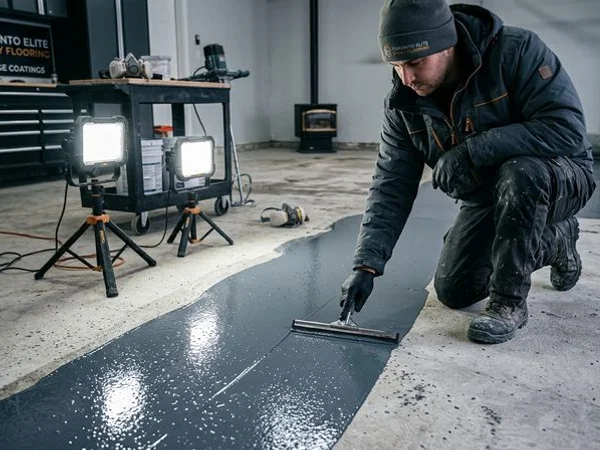
For unheated or partially heated spaces, we bring in propane construction heaters to bring the substrate up to the minimum threshold before application and maintain that temperature through the initial cure window. WSIB-compliant job site setups in enclosed spaces require CO monitoring when running combustion heaters, which is a site safety step our crews follow as standard on all winter installs. The added heating cost for a cold-weather job typically runs $150-$350 CAD depending on garage size and how long the site needs to be held at temperature, and that cost is included in the quote rather than added as a surprise line item.
Surface Preparation Standards That Determine Coating Life
No polyaspartic system - regardless of material quality - performs to specification on a substrate that has not been properly profiled. The International Concrete Repair Institute (ICRI) guideline 310.2R defines concrete surface profiles from CSP 1 (lightest, achieved by acid etching) through CSP 9 (heaviest, achieved by scarifying). Polyaspartic coatings require a minimum CSP 2-3 profile, which is reliably achieved only by diamond grinding with a planetary or single-head grinder using the correct diamond tooling for the concrete hardness.
Shot blasting is an alternative profiling method that achieves CSP 4-6 and is common in larger commercial applications in Mississauga and Vaughan industrial parks. For residential garages, diamond grinding is more practical because it allows the operator to work around drains, expansion joints, and perimeter edges that shot blast equipment cannot reach cleanly. The grinder also removes existing paint, sealers, efflorescence, and the carbonation layer that forms on the surface of older slabs - all of which would cause adhesion failure if left in place.
Crack repair is completed before priming, using a semi-rigid polyurea joint filler on control joints and a rigid epoxy paste on structural cracks. The distinction matters: a rigid filler in a control joint will re-crack as the slab continues to move seasonally, which is normal in a Toronto-area garage slab that sees freeze-thaw cycling. Semi-rigid polyurea filler in those joints flexes with the slab and maintains a sealed surface. We document the prep work with photos before coating, which becomes part of the warranty file.
Polyaspartic for Light Commercial Floors in the GTA
Beyond residential garages, polyaspartic is a strong candidate for light commercial flooring where the Canadian Food Inspection Agency (CFIA) or municipal health codes require a cleanable, seamless surface, or where the business cannot absorb a multi-day shutdown. Auto detailing shops, personal training studios, brewery taprooms, and veterinary clinics throughout Toronto, Etobicoke, and Vaughan have all seen polyaspartic specified as either a stand-alone or topcoat system in recent years.
For food-adjacent environments, we specify a polyaspartic formulation that meets NSF/ANSI 61 or equivalent food-contact safety requirements and provides a slip-resistance rating suitable for wet-area commercial use. ASTM C1028 wet coefficient of friction testing is the relevant standard: a value above 0.6 is the general threshold for commercial wet-area compliance. Broadcast aluminium oxide anti-slip aggregate added to the topcoat layer provides the necessary texture without significantly affecting the gloss or cleanability of the finished floor.
A typical 1,000 sq ft commercial polyaspartic install in the GTA - stand-alone system, full diamond-grind prep, anti-slip broadcast, and two topcoat passes - runs in the range of $6,000-$10,000 CAD installed, depending on substrate condition and the extent of crack or joint remediation required. The install itself completes in one to two days, with the space returning to commercial operation the following morning. For a Toronto epoxy flooring contractor, the ability to deliver a code-compliant, durable commercial floor on a one-night schedule is a measurable operational advantage for clients who cannot close for days.
Related Questions Toronto Homeowners Ask
How long does a polyaspartic floor coating actually last in a Toronto garage?
A properly installed polyaspartic topcoat over a full epoxy base system typically lasts 10-15 years before any recoating is needed in a residential Toronto garage. The primary wear factors in this climate are calcium chloride and road salt abrasion from tracked-in winter slush, which is why the Taber abrasion resistance of the aliphatic polyurea topcoat matters more here than it would in a warmer climate.
What is the total cost for a polyaspartic garage floor in North York or Etobicoke?
For a standard two-car garage (roughly 400-550 sq ft) in North York or Etobicoke, a full hybrid system - 100% solids epoxy base, decorative flake broadcast, and polyaspartic clear topcoat - typically runs $2,800-$4,500 CAD installed. Stand-alone polyaspartic on the same square footage runs slightly less, in the $2,200-$3,500 range, but the hybrid system is generally the better long-term investment given Toronto’s moisture and thermal cycling conditions.
Can polyaspartic be applied over a floor that was previously painted with a box-store epoxy paint?
No, not without removing the existing paint first. Box-store epoxy paints are typically water-based latex with a small percentage of epoxy resin - they are not the same chemistry as 100% solids epoxy, and they do not provide a sound bonding surface for a polyaspartic topcoat. Diamond grinding to bare concrete is required. The good news is that most of these thin paint films remove quickly, and the grinding step is included in every install we quote.
Does a polyaspartic floor require any ongoing maintenance?
Routine maintenance is minimal: sweep or dust-mop regularly to remove grit that would act as an abrasive under vehicle tyres, and clean oil or chemical spills before they dwell long enough to penetrate the topcoat. A pH-neutral cleaner diluted in water is appropriate for regular mopping. Avoid ammonia-based cleaners or highly alkaline degreasers, which can dull the gloss over time. There is no need for periodic waxing, resealing, or buffing - the aliphatic polyurea surface is self-contained.
How does the polyaspartic install process work from start to finish on the day of the job?
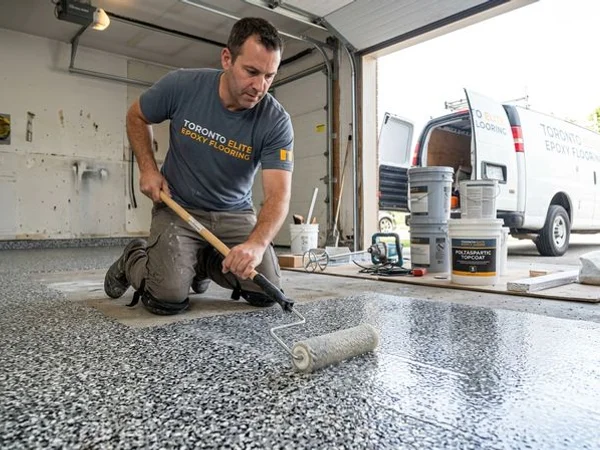
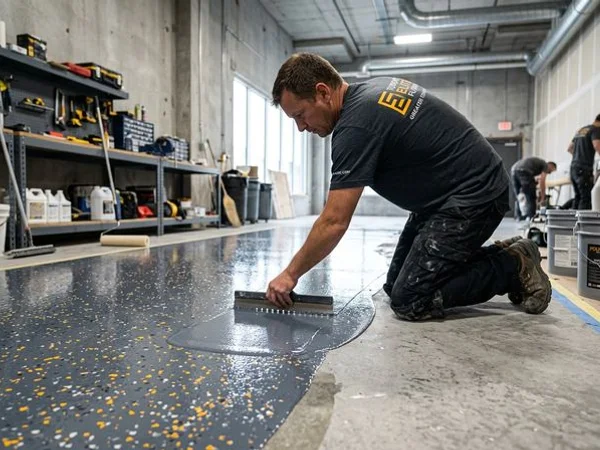
A residential garage install runs in a single day for most projects. The crew arrives early, moves out any remaining contents, and begins diamond grinding the full slab surface - typically 1-3 hours depending on size and substrate condition. Crack and joint repair follows, then the epoxy base coat application if running a hybrid system. The base coat reaches a recoat window in 3-6 hours at normal temperatures, at which point the flake broadcast (if included) is applied and excess flake is removed. The polyaspartic topcoat goes down last, and the floor is ready for foot traffic within a few hours of that final coat. Full vehicle loading is cleared at the 24-48 hour mark.
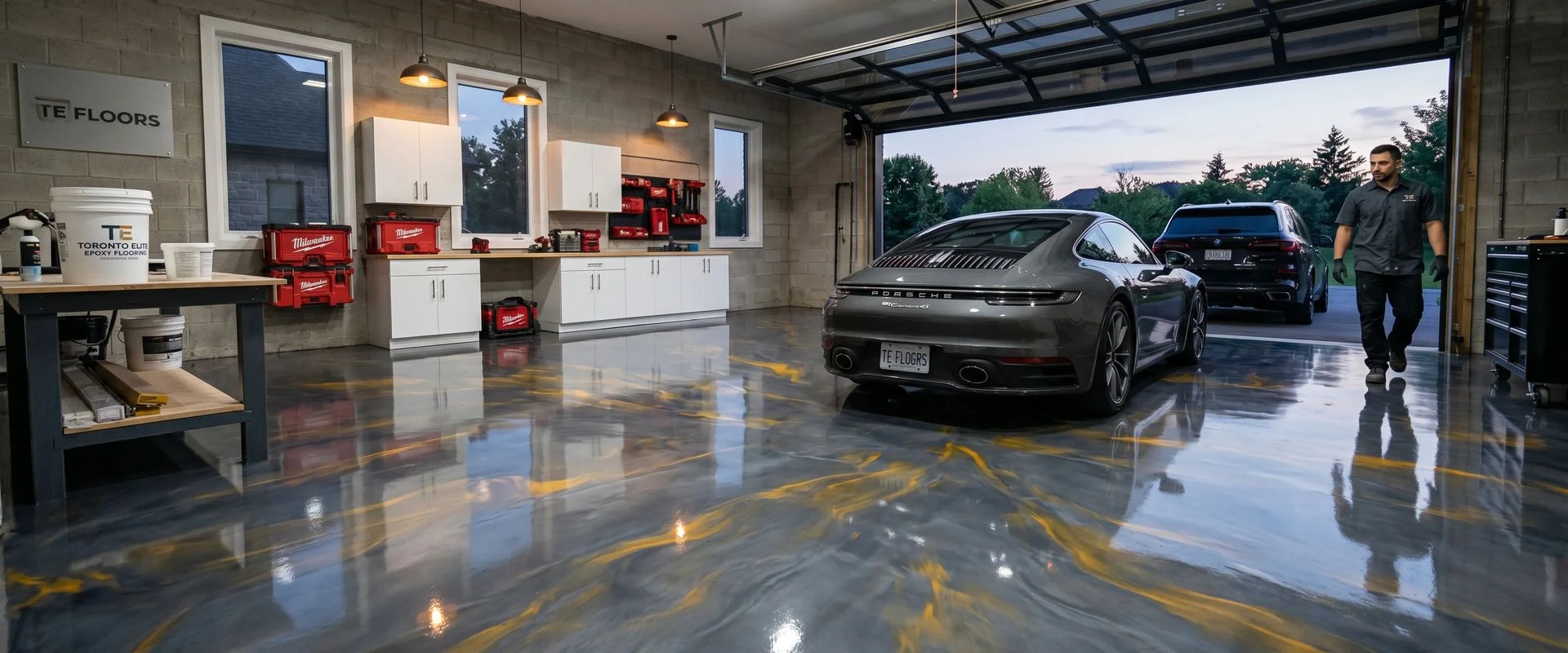
Our Polyaspartic Results in Toronto
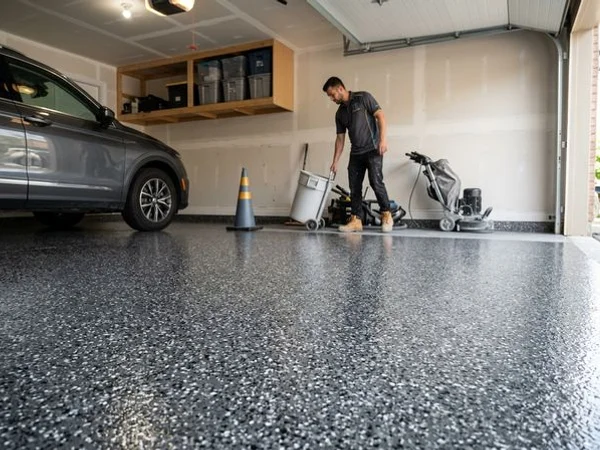
Polyaspartic Pricing
Pricing depends on whether polyaspartic is stand-alone or applied over an epoxy base.
Why GTA Customers Choose Toronto Elite Epoxy Flooring for Polyaspartic
Back in 24 Hours
When you can't afford a long downtime - polyaspartic gets you back fast.
No Yellowing
UV-stable aliphatic chemistry keeps the floor clear and crisp for years.
Cold-Weather Capable
Applies down to lower temps than standard epoxy - important for shoulder seasons.
Hybrid Systems
Often pair polyaspartic topcoat over our epoxy base - best of both worlds.
How Polyaspartic Works
Substrate Decision
We pick stand-alone polyaspartic or polyaspartic over epoxy based on your use case.
Diamond Grind Prep
Full prep regardless of system - polyaspartic still needs a sound bonding surface.
Fast-Cure Application
Polyaspartic cures fast - most installs are walkable in a few hours.
24-Hour Return
Floor is ready for full traffic the next day. Warranty in writing.
Ready for a Free On-Site Assessment?
Same-day quotes across the GTA. WSIB-certified, $2M liability on every project.
What Customers Say About Our Polyaspartic
"Toronto Elite did our two-car garage in Oakville - diamond grind to CSP 3, 100% solids epoxy base, then a polyaspartic topcoat. Floor was back in service within 24 hours and still has zero yellowing after two full winters."
"Cold-weather install in our garage - they used a polyaspartic system and we were back in the garage the next day."
"Triple-car garage with metallic flake under polyaspartic clear. Crisp, fast install, Warranty."
Polyaspartic FAQs
What's the difference between epoxy and polyaspartic?
Epoxy is the thick, durable base layer. Polyaspartic is an aliphatic polyurea topcoat that cures in about 24 hours and stays UV-stable with no yellowing. We commonly pair them - epoxy base for thickness and bond, polyaspartic topcoat for UV stability and fast return to service.
Will my polyaspartic floor yellow over time?
No. Polyaspartic is an aliphatic polyurea, which means it stays UV-stable indefinitely - unlike polyurethane or cheaper coatings that yellow within months.
Can polyaspartic be applied in winter?
Yes. Polyaspartic cures in colder temperatures than standard epoxy, which is why we use it for shoulder-season and winter installs in heated garages.
How long until I can drive on it?
Most garage installs are ready for vehicle traffic in 24-48 hours. Foot traffic is usually possible within a few hours of the topcoat.
Is it more expensive than standard epoxy?
The material is more expensive per litre, but you save on downtime. When fast return-to-service matters - like commercial environments - the cost difference is often worth it.
What does a polyaspartic floor coating cost in Toronto?
A stand-alone polyaspartic system on a standard two-car garage (roughly 500 sq ft) typically runs $2,500-$4,000 CAD installed, depending on substrate condition and flake or pigment choices. A polyaspartic topcoat added over a full epoxy base system adds roughly $3-$6 per sq ft to the base coat price. Concrete in poor condition requiring crack repair or skim-coat work before the polyaspartic layer will add to that range.
How does polyaspartic compare to polyurethane as a topcoat?
Polyurethane is aromatic-based and yellows under UV exposure within 12-24 months on floors that receive any natural light. Polyaspartic is aliphatic-based, which means the UV bonds do not degrade into chromophores that cause yellowing. For Toronto garages with windows or skylights, polyaspartic is the technically correct choice. Polyurethane is generally cheaper per litre but requires earlier recoating.
What warranty comes with a polyaspartic floor?
We provide a Warranty in writing on delamination and topcoat adhesion failure. The warranty covers manufacturing defects in the coating system and workmanship. It does not cover mechanical damage (impact gouging, dragging metal), chemical spills left unwiped for extended periods, or substrate failure caused by active hydrostatic pressure that was not disclosed before installation.
Does the concrete need special preparation before polyaspartic goes down?
Yes. Polyaspartic is not self-priming on raw concrete in all conditions, and skipping prep is the most common cause of peeling. We diamond-grind to a CSP 2-3 profile per ICRI standards, which opens the concrete pores and removes laitance. On slabs with existing moisture issues - common in older Toronto-area homes built before 1980 - we test moisture vapour emission (ASTM F1869 calcium chloride or F2170 in-situ RH) before choosing the primer chemistry.
Can polyaspartic go over an existing painted or sealed floor?
Not reliably without removing the existing coating first. A diamond grind or shot blast to bare concrete is required. Polyaspartic applied over an existing coating bonds to that coating, not to the concrete - when the old coating fails, the polyaspartic peels with it. We include full removal and prep in every quote.
How soon can you schedule a polyaspartic install in the GTA?
Most residential jobs in Toronto, North York, Etobicoke, and Mississauga can be scheduled within 1-2 weeks of a confirmed quote. Spring and early fall are our busiest periods - we book out further during those windows. Light commercial jobs requiring off-hours access typically need 2-3 weeks lead time for scheduling coordination.
Is polyaspartic safe for a garage used as a workshop with solvents and oils?
Polyaspartic has good resistance to motor oil, gasoline, most cleaning solvents, and de-icing salts - the primary chemical exposures in a typical Toronto garage. It is not rated for prolonged immersion in concentrated acids or strong caustics. For a working shop with heavy chemical exposure, we can specify a higher-build 100% solids epoxy base before the polyaspartic topcoat to increase the total film thickness and chemical resistance.
Related Services
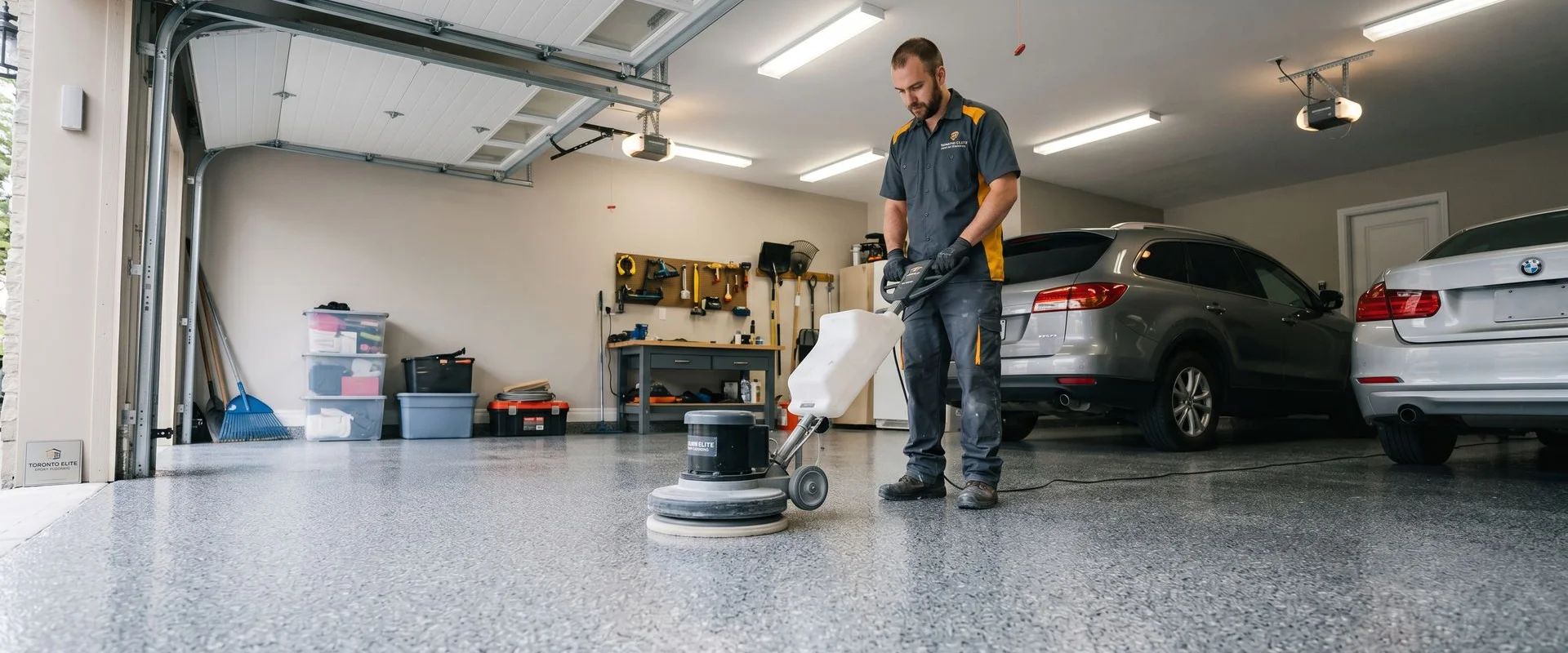
Garage Floor Epoxy in Toronto, ON
Diamond-ground to CSP 3 and moisture-tested before a 100% solid epoxy base, decorative quartz or metallic flake broadcast, and a UV-stable polyaspartic topcoat rated for Ontario road salt and hot-tire pickup. A 400 sq ft single-car garage runs $2,600-$4,000 installed and completes in 1-2 days. Every system includes anti-slip grit and WSIB-certified installation.
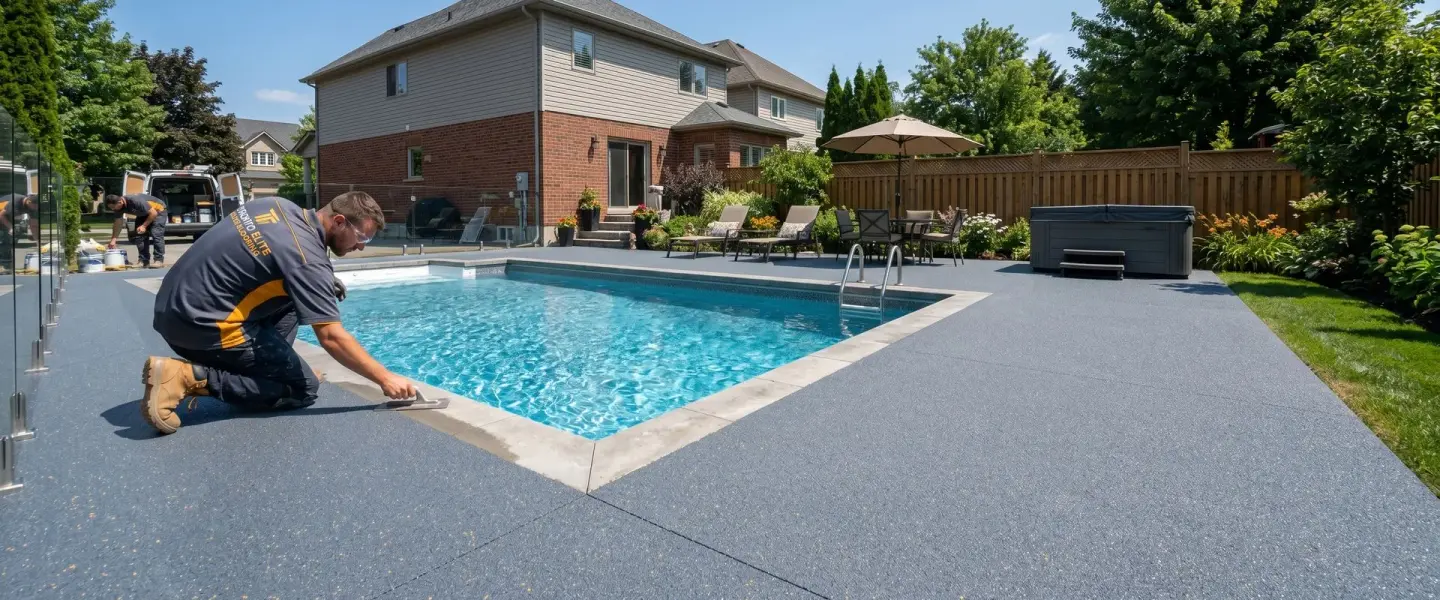
Outdoor Patio Epoxy Coating in Toronto, ON
UV-stable aliphatic polyaspartic topcoat over a textured non-slip base - rated for Ontario freeze-thaw cycling, road salt, and pool water without yellowing or peeling. A 400 sq ft pool deck or patio runs $3,200-$5,600 installed and completes in 2 days. Every outdoor system includes sealed expansion joint detailing and non-slip quartz aggregate broadcast.
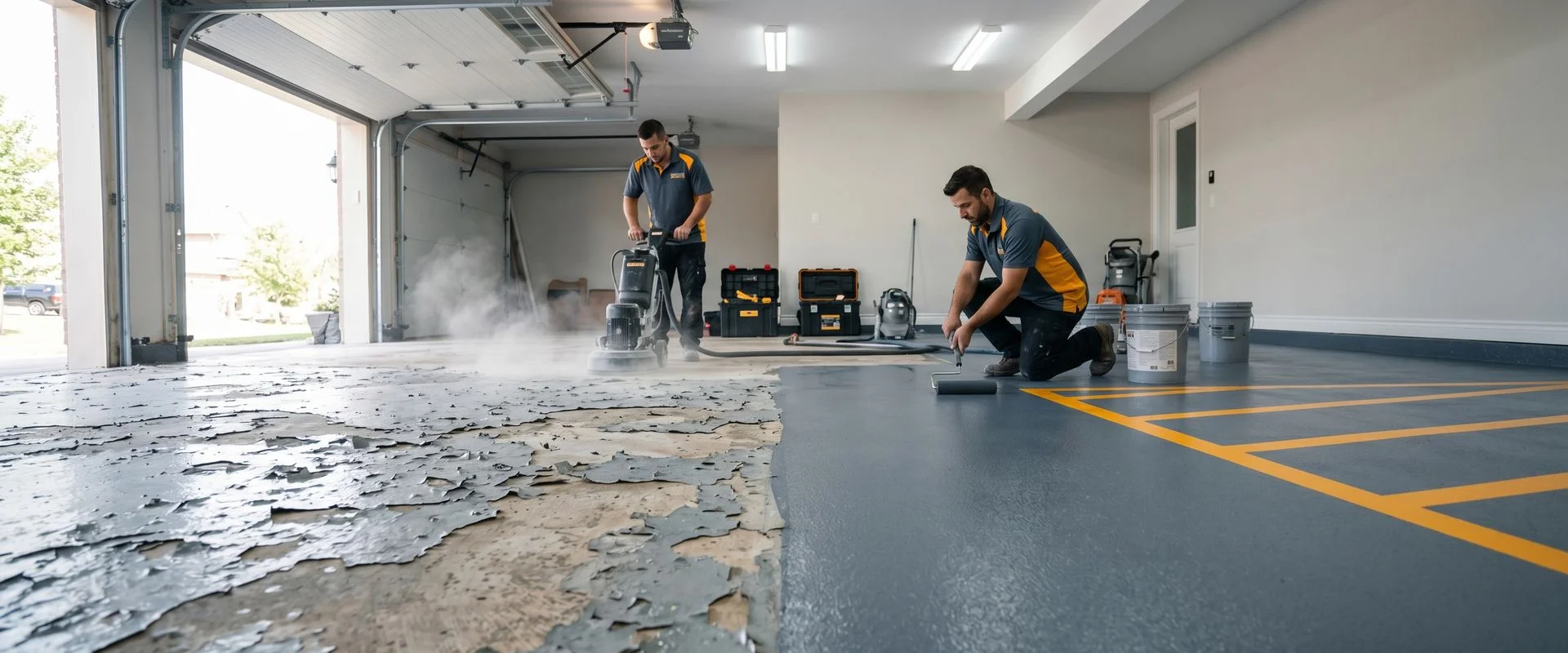
Epoxy Floor Repair & Recoat in Toronto, ON
Full mechanical removal of failed or peeling epoxy back to bare concrete, ASTM F2170 moisture re-testing, and a fresh 100% solid system rated for 10-15+ years on a correctly profiled CSP 3 slab. Full recoat runs $3-$7 per sq ft installed; most GTA garage repairs complete in a 2-day window. We diagnose the root cause first so the new floor doesn't fail the same way.
Ready to Book Polyaspartic?
Same-day free on-site assessment. WSIB-certified, $2M liability on every project.