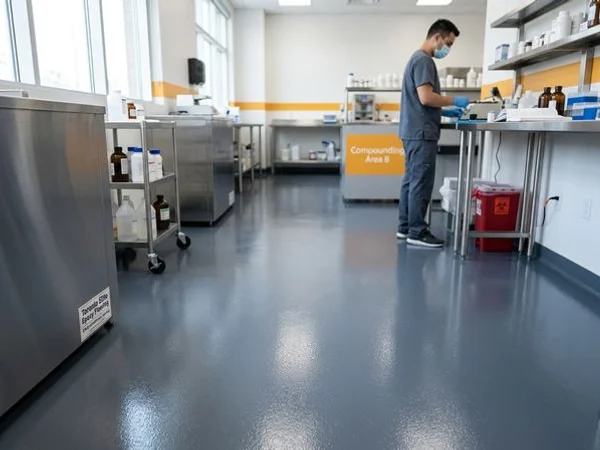
Toronto Elite Epoxy Flooring: Novolac Chemical-Resistant, Anti-Static, and Research Lab Floor Systems for Commercial & Industrial
Toronto Elite Epoxy Flooring installs novolac chemical-resistant epoxy systems, seamless sanitary coving, and anti-static floor coatings for research laboratories, university science facilities, clinical testing labs, pharmaceutical QC labs, and industrial materials testing environments throughout Toronto, ON. Every laboratory install uses CSP 3 surface preparation, ASTM F2170 moisture verification, and chemical resistance validation appropriate to the specific reagent and solvent profile of the facility.
Laboratory floors face chemical exposure demands that standard bisphenol-A epoxy cannot withstand. Novolac epoxy, derived from phenol-formaldehyde condensation rather than bisphenol-A synthesis, provides a higher crosslink density and significantly superior resistance to concentrated sulphuric acid, hydrochloric acid, sodium hydroxide, acetone, methanol, ethanol, and halogenated solvents that are routine in research and analytical laboratory environments. Standard 40-60% solids epoxy systems begin to soften and blister under repeated solvent spill exposure in 12-24 months. Novolac systems maintain surface integrity under the same conditions for 8-15 years. Anti-static topcoats are required in labs handling flammable solvents with auto-ignition risk below 100°C to comply with NFPA 45 laboratory fire code and Ontario Fire Code Section 5.12.
Laboratory floor projects typically run 500-3,000 sq ft and complete in phased overnight or weekend shifts to minimise disruption to ongoing research. Pricing ranges from $10 to $18 per sq ft installed depending on chemical resistance specification, anti-static requirement, and coving complexity. Installation records and chemical resistance data sheets are provided with every project.
Toronto Elite Epoxy Flooring provides laboratory epoxy flooring to Toronto, ON and surrounding Ontario cities, including Mississauga, Markham, Vaughan, Brampton, Richmond Hill, Oakville, Burlington, Etobicoke, North York, Scarborough, Hamilton, Waterloo, Guelph, Ajax, and Pickering.
Laboratory Epoxy Flooring in Toronto
Toronto Elite Epoxy Flooring installs novolac chemical-resistant floor systems for research laboratories, university science facilities, clinical testing labs, and pharmaceutical quality control environments throughout Toronto and the GTA. Our seamless novolac epoxy base coats and anti-static topcoats resist the concentrated acid, base, and solvent exposure that degrades standard epoxy systems in 12-24 months, and our phased scheduling approach keeps labs operational throughout installation.
What Is Laboratory Epoxy Flooring?
Laboratory epoxy flooring is a seamless, chemically resistant floor system engineered for the concentrated acid, solvent, and reagent exposure found in research, clinical, and industrial testing environments. Novolac epoxy, with its higher crosslink density relative to standard bisphenol-A systems, is the industry standard for environments where floor integrity under chemical spill conditions is a safety and regulatory requirement.
What Does a Laboratory Epoxy System Include?
- CSP 3 diamond-ground surface preparation
- Novolac epoxy base coat (chemical resistance validation per reagent profile)
- Anti-static topcoat for flammable solvent environments (NFPA 45 compliant)
- Integral 4-6 inch sanitary coving
- Seamless floor-to-drain transitions
- Chemical resistance documentation and installation records
How Much Does Laboratory Epoxy Flooring Cost in Toronto?
Laboratory epoxy flooring runs $10-$18 per sq ft installed in Toronto and the GTA, depending on chemical resistance specification, anti-static topcoat requirement, and coving complexity. Most projects run 500-3,000 sq ft.
Specialized Epoxy Solutions for Laboratory Environments
We engineer and install high-performance epoxy floor coating systems designed for laboratories that demand chemical resistance, hygiene, and operational safety. Our team uses CSP 3 diamond grinding and ASTM F2170 moisture testing on every project, and installs novolac epoxy systems with a proven 8-15 year service life under aggressive solvent exposure.
Research Laboratories and QC Facilities
We design laboratory floor systems for research and quality control spaces where high solvent exposure and continuous foot traffic occur. These areas often handle concentrated acids such as sulphuric and hydrochloric acid, as well as common solvents like acetone, methanol, and IPA. Standard epoxy coatings degrade within 12-24 months under these conditions, but our novolac phenol-formaldehyde formulations maintain structure for over a decade.
Each installation complies with NFPA 45 laboratory fire code and Ontario Fire Code Section 5.12 concerning flammable solvent storage. We apply anti-static ESD-dissipative topcoats designed to prevent ignition below auto-ignition temperatures of 100°C. These topcoats stabilise static charge - a critical factor in solvent-handling zones where discharge could ignite vapour.
We incorporate 4-6 inch integral sanitary coving and seamless transitions around floor drains to maintain hygienic, containment-quality environments. Overnight phasing ensures that laboratory work continues uninterrupted and testing operations remain stable during flooring upgrades. North York and Mississauga university research facilities regularly schedule these installations to coincide with scheduled term breaks - we can work within those windows.
Clinical and Science Facility Requirements
Our epoxy systems for university science buildings and clinical testing laboratories prioritise safety, chemical cleanliness, and low maintenance. Resin flooring solutions maintain impermeable surface coatings that resist staining and microbial growth.
We confirm sub-slab conditions using ASTM F2170 in-situ relative humidity testing before installation. This process prevents future delamination or blistering, ensuring extended performance over the floor’s service life. Our use of novolac epoxy systems also reduces long-term maintenance costs through superior crosslink density compared with bisphenol-A epoxies.
Each project meets WSIB certification standards and carries $2M liability coverage, giving clients assurance in both regulatory compliance and workplace safety. Integrated phased overnight scheduling avoids any need for extended laboratory closures or relocation during installation.
Industrial Materials Testing Applications
In industrial test labs and material analysis environments, mechanical impact and chemical loading push flooring to its limits. Our industrial flooring systems are engineered to resist abrasion, dropped-tool damage, and exposure to toluene, xylene, and halogenated solvents. We evaluate every slab for tensile bond strength following surface preparation to ensure coating adhesion.
We deploy performance flooring incorporating integral coving, sloped floor-to-drain designs, and anti-static top layers that protect sensitive instrumentation from electrostatic discharge. By maintaining precise adherence to NFPA 45 and Ontario Fire Code requirements, our systems optimise safety, regulatory compliance, and operational uptime for Markham and Scarborough industrial testing facilities where chemical exposure profiles are frequently more aggressive than typical commercial lab environments.
Advanced Chemical and Solvent Resistance Technologies
We design flooring systems for environments where acids, solvents, and static hazards are daily operational conditions. Our approach uses novolac phenol-formaldehyde chemistry, dense crosslinking, and anti-static thermal controls to create long-lasting protection against chemical attack and ignition hazards.
Novolac Epoxy Phenol-Formaldehyde Systems
Our novolac epoxy systems use phenol-formaldehyde condensation polymers with a tighter molecular network than standard bisphenol-A epoxies. The increased crosslink density enhances resistance to chemical diffusion and softening. Under repeated solvent exposure, standard epoxies often show visible degradation within 12-24 months, while novolac systems typically maintain structural integrity for 8-15 years in laboratory applications.
We verify surface preparation using CSP 3 diamond grinding for adhesion and conduct ASTM F2170 in-situ moisture tests on every slab to prevent subfloor vapour issues. These steps allow the resin to fully cure and create a stable bond line that tolerates temperature cycling. WSIB certification and $2M liability coverage ensure every installation meets both technical and safety standards.
| Epoxy Type | Chemical Network | Typical Service Life | Solvent Resistance |
|---|---|---|---|
| Standard Bisphenol-A | Linear crosslinking | 1-2 years | Moderate |
| Novolac Phenol-Formaldehyde | Multi-ring dense matrix | 8-15 years | Excellent |
Acid and Solvent Resistance Capabilities
Our flooring resists the full range of common laboratory chemicals. Novolac formulations provide strong sulphuric acid and hydrochloric acid resistance, even in concentrated forms. They maintain hardness and gloss after extended contact with acetone, methanol, ethanol, and isopropanol (IPA).
In university and pharmaceutical labs, mixed solvent spills containing toluene, xylene, and halogenated hydrocarbons are frequent. Novolac’s low permeability slows diffusion, maintaining the seamless barrier layer over time. For added containment, every system includes 4-6 inch integral sanitary coving that creates a continuous transition from floor to wall or drain, preventing chemical seepage and simplifying decontamination during audits or spill events.
Anti-Static Topcoat Thermal Safety
For facilities handling flammable solvents, we install ESD-dissipative topcoats with controlled surface resistivity. These coatings reduce static build-up and prevent discharge that could ignite volatile vapours in compliance with NFPA 45 and Ontario Fire Code Section 5.12. Each formulation maintains auto-ignition suppression below 100°C, adding a safety margin above typical room temperatures in solvent storage and dispensing areas.
Our anti-static films bond over the novolac base without reducing chemical performance. They remain stable under continuous foot and cart traffic in industrial testing areas and analytical laboratories. Combined with phased overnight installation, this approach maintains certified thermal safety and solvent immunity while keeping operations running.
Installation Process and Regulatory Compliance
We apply strict installation and verification procedures to ensure every system meets laboratory-grade performance, fire safety, and hygiene standards. Each phase - from surface profiling to final cure - follows a defined process that preserves facility uptime while meeting NFPA 45 and Ontario Fire Code requirements.
CSP 3 Diamond Grinding and Floor Prep
We begin every epoxy floor installation with CSP 3 diamond grinding, verified for profile consistency before resin application. This method exposes clean concrete, removes laitance, and provides optimal adhesion for novolac systems. Many competitors stop at CSP 2 - our tighter specification prevents delamination in high-traffic lab zones under frequent chemical and thermal cycling.
Our team uses vacuum-assisted grinders to maintain air quality for occupied facilities. We confirm surface texture with replica tape readings. Before priming, technicians inspect for cracks and vapour transmission points; any identified voids are filled using epoxy mortar to ensure uniform substrate absorption.
Each site receives documentation showing CSP level verification alongside our WSIB certification and $2M liability coverage. These records form part of the compliance package delivered to building management and safety officers.
ASTM F2170 Moisture Testing Standards
We follow ASTM F2170 in-situ relative humidity testing on every project. Testing occurs 48 hours after core drilling to confirm slab equilibration. This method identifies internal moisture levels that could otherwise compromise adhesion or cause osmotic blistering beneath cured coatings.
Moisture readings must indicate less than 75% RH or meet the manufacturer’s tolerance for novolac epoxy systems. When we detect elevated results, we implement vapour mitigation primers or extend the drying period before coating.
Our technicians log all readings with probe depth, temperature, and ambient humidity. These results become part of the project’s permanent record submitted with client compliance files - particularly important for Mississauga pharmaceutical QC labs where GMP documentation standards require full material and process traceability.
Integral Sanitary Coving and Seamless Transitions
We install 4-6 inch integral sanitary coving at all wall bases. This detailing prevents fluid accumulation and microbial growth while satisfying inspection requirements for pharmaceutical and clinical laboratories.
Our method uses hand-troweled epoxy mortar that shapes a continuous curve from wall to floor. The result is a single monolithic surface with no seam between floor and cove.
| Feature | Purpose | Typical Height | Compliance Reference |
|---|---|---|---|
| Integral Coved Base | Prevents fluid retention | 4-6 in. | Lab hygiene audits |
| Seamless Floor-to-Drain Transition | Eliminates grout joints | Continuous slope | NFPA 45 / Ontario Fire Code 5.12 |
Each transition slope is verified for drain flow rate and surface continuity. The floor-to-drain seamless transition allows easy wash-downs without delamination risk at the joint.
Phased Overnight Installation for Occupied Facilities
Research and clinical labs often run continuous operations. We coordinate phased overnight installation schedules to avoid downtime while maintaining access for essential daytime work.
Our crew isolates one zone per night using portable containment walls and negative air filtration. We perform substrate grinding, moisture checks, and novolac epoxy application within confined overnight work hours.
By morning, each section reaches walkable hardness, allowing normal operations to continue. This process includes a pre-scheduled phase plan that details resin cure windows, odour control procedures, and temperature stabilisation. It supports compliance with NFPA 45 ignition control limits and Ontario Fire Code requirements while minimising disruption to ongoing testing or production workflows.
Service Life, Durability, and Maintenance Considerations
We specify each epoxy system according to laboratory use intensity, solvent exposure profile, and maintenance capacity. Our installations balance chemical resistance, static control, and cleanability across research, pharmaceutical, and industrial testing settings.
Comparing Epoxy System Lifespans
Laboratory flooring performance varies sharply between standard epoxy and novolac epoxy systems. Standard high-build epoxy coatings typically exhibit 12-24 month degradation under frequent solvent cleaning or splash exposure. In contrast, novolac epoxy - based on phenol-formaldehyde condensation chemistry - delivers 8-15 years of service life when correctly applied and maintained.
Chemical structure directly contributes to this difference. Bisphenol-A epoxies, while suitable for light-duty zones, have lower crosslink density than novolac systems, reducing solvent resistance. For high-traffic research facilities, novolac formulations are the correct specification for long-term stability against sulphuric acid, methanol, and aromatic solvents.
| System Type | Typical Lifespan | Chemical Resistance | Recommended Use |
|---|---|---|---|
| Standard Epoxy | 1-2 years | Moderate | Light lab traffic, low chemical exposure |
| Novolac Epoxy | 8-15 years | Excellent | Chemical labs, QC testing, solvent storage |
| Polished Concrete | 5-10 years | Limited | Low-exposure research areas |
Performance also depends on surface preparation - CSP 3 diamond grinding and ASTM F2170 moisture testing are standard on every project and directly influence the coating’s service life.
Degradation Timelines in Laboratory Settings
Exposure type defines how quickly epoxy coatings degrade. Continuous splash zones in pharmaceutical QC labs or materials testing environments present challenges including solvent absorption, discolouration, and microcracking. Standard epoxy typically starts losing gloss and hardness within 12 months of repeated contact with acetone, IPA, and ethanol mixtures.
Novolac formulations resist concentrated acids, halogenated solvents, and high-temperature loads up to auto-ignition levels below 100°C, making them safer under NFPA 45 and Ontario Fire Code Section 5.12 conditions. Proper installation techniques - including 4-6 inch integral sanitary coving and floor-to-drain seamless transitions - prevent boundary breakdown and bacterial accumulation at the perimeter.
When degradation occurs, we phase re-coating overnight to avoid laboratory downtime. Our WSIB-certified team maintains $2M liability coverage, ensuring all replacement work proceeds under verified safety and regulatory standards.
Maintenance for Long-Term Performance
Daily neutral pH cleaning removes solvent residues that could weaken crosslinks over time. Surface re-topcoating every 3-5 years preserves reflectivity and chemical resistance in both novolac epoxy and performance flooring systems.
Anti-static topcoats require periodic grounding verification to maintain ESD performance in sensitive research zones. Facility managers should schedule solvent compatibility checks whenever chemical inventories change - particularly when new reagent classes are introduced.
For laboratories with near-continuous operation, phased overnight maintenance allows partial sections to remain active. When sections require replacement, hybrid high-build epoxy overlays can be applied over the existing novolac base without full removal, provided the substrate bond is intact. We provide maintenance schedules matched to exposure severity at every project handover.
Related Questions Toronto Lab Managers Ask
Does a university research lab need the same epoxy specification as a pharmaceutical QC lab?
No - and getting this wrong wastes budget. A university chemistry research lab handling mixed solvents needs novolac epoxy for chemical resistance, but typically does not need GMP material traceability documentation. A pharmaceutical QC lab under GMP guidelines needs the same novolac chemistry plus ESD-dissipative topcoats for weighing equipment, full material traceability records, and documentation structured for Health Canada audit review. We assess the actual regulatory environment first and spec to that, not to a blanket standard that over-engineers one and under-specifies the other.
Why does CSP 3 grinding matter more in labs than in commercial spaces?
Commercial epoxy floors in garages or retail experience mostly mechanical loads - foot traffic, wheel loads, dropped items. Lab floors experience chemical permeation from repeated solvent and acid spills on top of mechanical loads. A CSP 2 surface has insufficient anchor profile for novolac adhesion under combined chemical and thermal cycling. We’ve assessed failed lab floors where the previous installer stopped at CSP 2 and the coating delaminated at the bond line within 18 months of solvent exposure. CSP 3 is non-negotiable for novolac in a real lab environment.
What happens when lab operations change and the solvent inventory changes after the floor is installed?
Novolac epoxy covers a broad chemical resistance spectrum - sulphuric acid, hydrochloric acid, acetone, methanol, ethanol, IPA, toluene, xylene, and most halogenated solvents. If your lab adds a new solvent class, we can test compatibility against the installed system’s chemistry data sheet before it becomes a floor problem. Where the new chemistry falls outside the installed system’s resistance range, we can specify a topcoat upgrade or barrier layer rather than full floor replacement - much lower cost than a complete reinstall.
Are there Mississauga or Markham pharmaceutical facilities that have had Health Canada GMP inspections on epoxy floors?
Yes - pharmaceutical manufacturing and QC operations in Mississauga and Markham regularly undergo Health Canada Drug Premises Inspections where flooring is explicitly assessed for impermeability, cleanability, and freedom from cracks or crevices that could harbour bioburden. Facilities that used standard commercial epoxy or ceramic tile with grout joints frequently receive DPIR citations for flooring deficiencies. Our novolac systems address the root cause - seamless chemistry with no grout joints - and we provide the installation documentation that satisfies the inspection record requirement.
How long after installation before a lab can return to full solvent use?
Novolac epoxy systems reach walkable hardness within 12-18 hours of application. Full chemical resistance cure - where the crosslink density is complete and the floor can handle concentrated solvent immersion - takes 5-7 days at standard lab temperatures. We provide a curing protocol at handover with a phased return-to-service schedule: light foot traffic after 24 hours, cart and equipment traffic after 48-72 hours, full chemical exposure after 7 days. This prevents the early chemical exposure that causes premature topcoat damage before full cure is reached.
Laboratory Epoxy Pricing
Chemical resistance specification and anti-static requirement affect final price.
Why GTA Customers Choose Toronto Elite Epoxy Flooring for Laboratory Epoxy
Novolac, Not Bisphenol-A
We specify phenol-formaldehyde novolac epoxy for lab floors - the chemistry that delivers 8-15 year service life where standard epoxy degrades in 12-24 months under sulphuric acid, acetone, and halogenated solvent exposure.
NFPA 45 Anti-Static Specification
Anti-static topcoats rated for auto-ignition suppression below 100°C for flammable solvent handling zones. We spec the ESD resistance range to your specific ignition risk profile, not a generic off-the-shelf coating.
Sanitary Coving Included, Not Extra
4-6 inch hand-troweled integral sanitary coving is part of every lab install. The continuous floor-to-wall radius is required by health inspection and contamination control audits - we don't charge it as an add-on.
Labs Stay Operational During Install
Section-by-section overnight installation with portable containment walls and negative-air filtration. Research continues during the day; each section is walkable by the following morning.
How Laboratory Epoxy Works
Reagent & Chemical Profile Assessment
We review your complete solvent and reagent inventory, flammable classification, drain layout, and ESD requirements before specifying the novolac system and anti-static topcoat tier.
CSP 3 Prep & Moisture Testing
Diamond grinding to CSP 3 surface profile, ASTM F2170 in-situ relative humidity testing at 48-hour equilibration, slab condition documentation, and void filling with epoxy mortar before any coating.
Phased Overnight Application
Novolac base coat, anti-static topcoat, and hand-troweled 4-6 inch integral sanitary coving applied in section-by-section overnight shifts with portable containment walls and negative-air filtration.
Compliance Documentation Package
Chemical resistance data sheets matched to your reagent inventory, ASTM F2170 moisture logs, CSP surface profile records, installation records, and WSIB documentation provided at handover.
Ready for a Free On-Site Assessment?
Same-day quotes across the GTA. WSIB-certified, $2M liability on every project.
What Customers Say About Our Laboratory Epoxy
"We manage the analytical chemistry labs at a Scarborough research facility and had been dealing with epoxy floors degrading around our solvent fume hoods every 18 months. Toronto Elite specified a novolac phenol-formaldehyde system with the correct anti-static topcoat for our acetone and IPA handling zones, installed it in overnight phases over a long weekend, and delivered the chemical resistance documentation our safety officer needed. Two years in, zero degradation."
"Our Mississauga pharmaceutical QC lab needed flooring that could pass an internal GMP audit. Toronto Elite knew the difference between a university research lab and a GMP QC environment - they spec'd the ESD-dissipative topcoat in the right ohm range for our weighing equipment and provided full material traceability records. The sanitary coving is perfect, no gaps at the wall base. The auditor had no comments on the flooring."
"Industrial materials testing lab in Markham - we were running toluene and xylene exposure tests daily and had standard epoxy floors that were blistering badly. Toronto Elite switched us to a novolac system and the difference is obvious. The floor looks the same as day one after 14 months of harsh solvent exposure. The phased overnight installation meant we never had to close the lab - sections were ready before our 8am shift every morning."
Laboratory Epoxy FAQs
What epoxy is used in research and clinical laboratories?
Laboratory floors require novolac epoxy base coats rather than standard bisphenol-A systems. Novolac provides significantly higher crosslink density and resistance to concentrated acids, bases, ketones, and halogenated solvents that degrade standard epoxy in 12-24 months. Anti-static topcoats are added in labs handling flammable solvents below 100°C auto-ignition threshold to comply with NFPA 45 and Ontario Fire Code Section 5.12.
How does novolac phenol-formaldehyde epoxy compare to bisphenol-A in crosslink density and solvent resistance?
Novolac epoxy forms through phenol-formaldehyde condensation rather than bisphenol-A synthesis, producing a multi-ring dense molecular network with significantly higher crosslink density. This tighter structure reduces solvent diffusion and prevents the softening, blistering, and micro-cracking that standard bisphenol-A epoxy exhibits under repeated acid and solvent exposure. Bisphenol-A systems typically degrade within 12-24 months in lab environments; novolac systems maintain structural integrity for 8-15 years under the same conditions. The difference is measurable under concentrated sulphuric acid, acetone, methanol, and halogenated solvent exposure - the environments where the chemistry specification actually matters.
What chemical resistance can be expected against toluene, xylene, and halogenated solvents?
Novolac epoxy maintains stability against toluene, xylene, dichloromethane, chloroform, and most halogenated hydrocarbons common in pharmaceutical QC and analytical research labs. Standard bisphenol-A epoxy films blister and lose adhesion under these exposures within months due to lower crosslink density. We recommend novolac in any environment using aromatic or halogenated solvents as routine working fluids - not just occasional spill exposure. We review your specific solvent list during the pre-install assessment and confirm chemical compatibility before specifying the coating system.
What NFPA 45 and Ontario Fire Code Section 5.12 requirements apply to laboratory flooring?
NFPA 45 and Ontario Fire Code Section 5.12 require laboratory flooring in flammable and combustible liquid storage and use areas to mitigate static discharge ignition risk. This means anti-static ESD-dissipative topcoats are required in any lab zone where flammable solvents with auto-ignition temperatures below 100°C are handled. The topcoat must maintain controlled surface resistivity to prevent discharge that could ignite solvent vapour. We spec the resistance range to your specific solvent classification and provide documentation confirming NFPA 45 compliance as part of the installation record package.
How are 4-6 inch integral sanitary coving details built for laboratory floors?
Integral sanitary coving is hand-troweled using the same epoxy mortar as the floor system - not a separate vinyl cove base that can lift or harbour bacteria behind it. The mortar is shaped to a continuous radius at every wall-floor junction, typically 4-6 inches tall, creating a seamless transition that can be washed from wall to drain without fluid retention in corners. The coving is applied as part of the floor system installation and cures as a single monolithic surface. This detail is required by lab health inspection standards and contamination control protocols in pharmaceutical QC environments.
Can lab flooring be installed without shutting down the facility?
Yes. Laboratory floor projects are scheduled in phased overnight or weekend shifts to maintain research operations throughout. Each section is isolated with portable containment walls and negative-air filtration, installed, cured, and verified before the next section begins. Zero-VOC chemistry eliminates air quality concerns in occupied research environments, and each section reaches walkable hardness by the following morning.
How much does laboratory epoxy flooring cost in Toronto?
Laboratory epoxy flooring runs $10-$18 per sq ft installed in Toronto and the GTA. Standard epoxy with anti-static topcoat runs $10-$12; novolac systems for heavy chemical environments run $14-$18. Integral sanitary coving up to 6 inches is included. Most lab projects run 500-3,000 sq ft and complete in 2-5 phased overnight or weekend shifts. Pricing is confirmed after on-site slab assessment - not by phone.
What chemical resistance does novolac epoxy provide?
Novolac epoxy systems withstand concentrated sulphuric acid, hydrochloric acid, nitric acid (dilute), sodium hydroxide, acetone, methanol, ethanol, isopropyl alcohol (IPA), toluene, xylene, and most halogenated solvents common in analytical and research laboratory environments. We validate the specific chemistry against your reagent inventory before specifying the system, and provide compatibility documentation at project handover.
Is university laboratory flooring different from pharmaceutical lab flooring?
University research labs typically require broad-spectrum chemical resistance without GMP documentation. Pharmaceutical QC labs require GMP documentation, material traceability, and in many cases ESD-dissipative topcoats for static-sensitive instrumentation - specifications that overlap with our pharmaceutical cleanroom systems. We specify the correct system for your facility type and provide documentation appropriate to your regulatory environment, whether that is internal safety compliance or formal Health Canada audit readiness.
Related Services
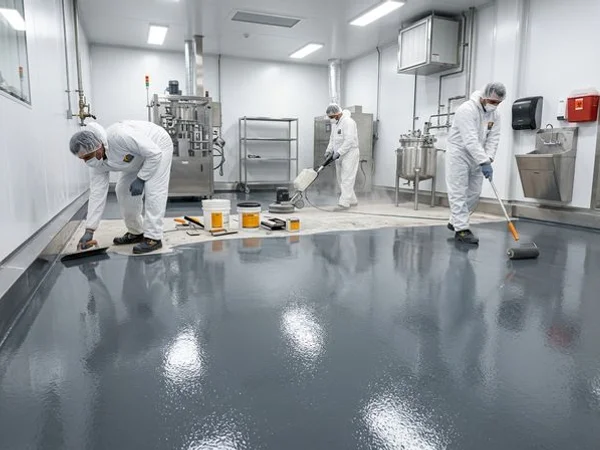
Pharmaceutical Cleanroom Epoxy Flooring in Toronto, Ontario
ISO 5-8 classified cleanroom epoxy systems with novolac chemical-resistant base coats, ESD-dissipative topcoats, and zero-particle-emission chemistry for GMP pharmaceutical and compounding pharmacy facilities in the GTA. Pricing runs $12-$20 per sq ft installed; off-hours phased scheduling maintains cleanroom integrity throughout. WSIB-certified crews with $2M liability and full GMP compliance documentation on every project.
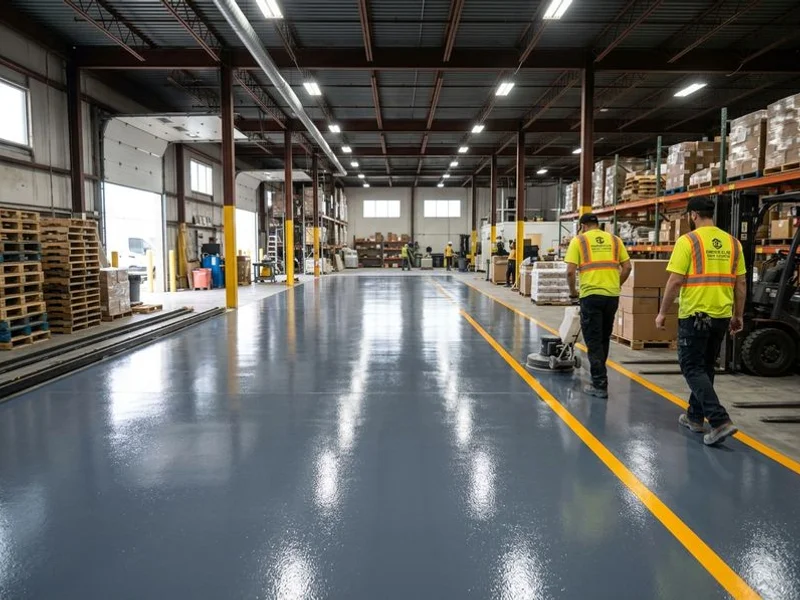
Commercial Epoxy Flooring in Toronto, Ontario
Commercial epoxy flooring systems for retail, restaurant, office, healthcare, and institutional facilities in Toronto and the GTA. CFIA-compliant commercial kitchen coatings, institutional medical floors, ESD conductive systems, and high-traffic retail showroom epoxy. Pricing from $3 per sq ft for commercial warehouse epoxy to $20 per sq ft for pharmaceutical cleanroom systems. WSIB-certified, $2M liability, compliance documentation on every project.
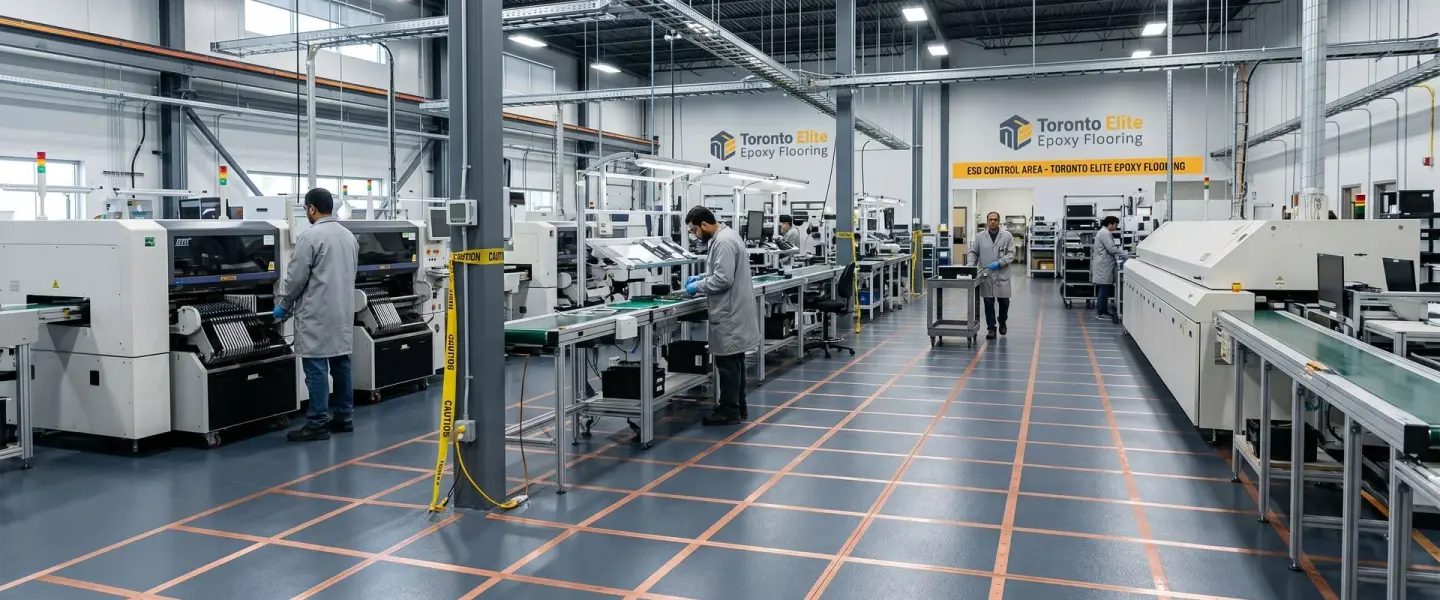
ESD Conductive Epoxy Flooring in Toronto, ON
ANSI/ESD S20.20 certified conductive epoxy with copper grounding grid, verified by megohmmeter to NFPA 99 and EOS/ESD Association STM7.1 standards. Pricing runs $7-$14 per sq ft installed; resistance testing and a full compliance report are included on every GTA install. Used in electronics manufacturing, data centres, and cleanroom environments across Mississauga and Markham.
Secondary Containment Coatings in Toronto, Ontario
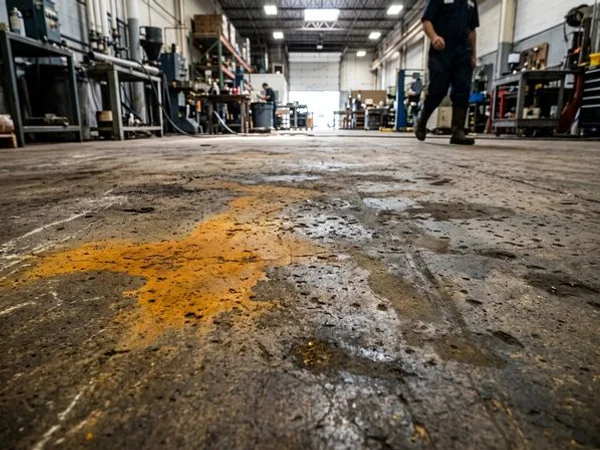
TSSA-compliant secondary containment coatings for fuel tank berms, chemical storage areas, transformer pads, and industrial spill containment floors in Toronto and the GTA. Novolac and vinyl ester systems rated for concentrated chemical and petroleum immersion. Pricing runs $10-$18 per sq ft installed. WSIB-certified, $2M liability, and full compliance documentation on every project.
Institutional & Medical Epoxy Flooring in Toronto, ON
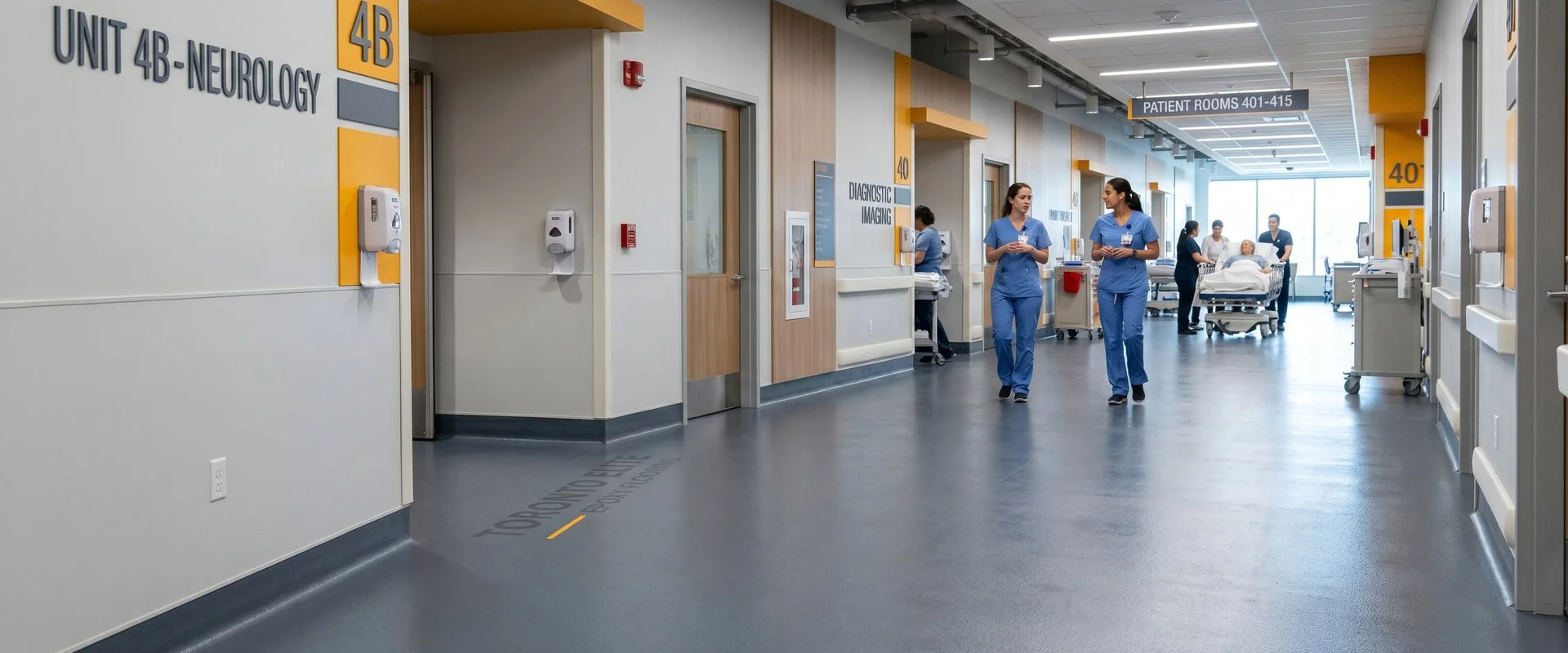
Seamless antimicrobial epoxy systems with 4-6 inch wall coving and zero-VOC chemistry for GTA hospitals, clinics, schools, and long-term care facilities. Pricing runs $6-$12 per sq ft installed; section-by-section scheduling keeps your facility operational throughout. WSIB-certified crews, $2M liability, and full IPAC Canada compliance documentation on every project.
Ready to Book Laboratory Epoxy?
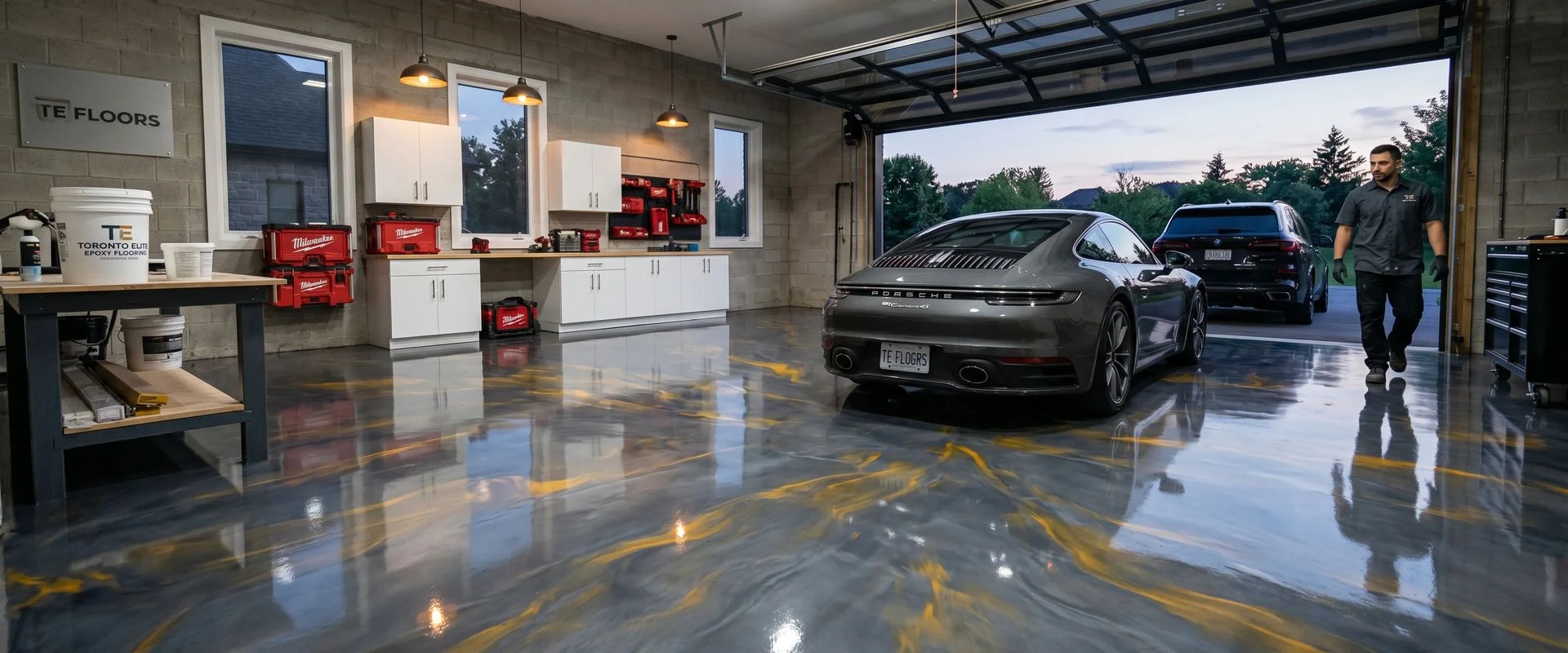
Same-day free on-site assessment. WSIB-certified, $2M liability on every project.