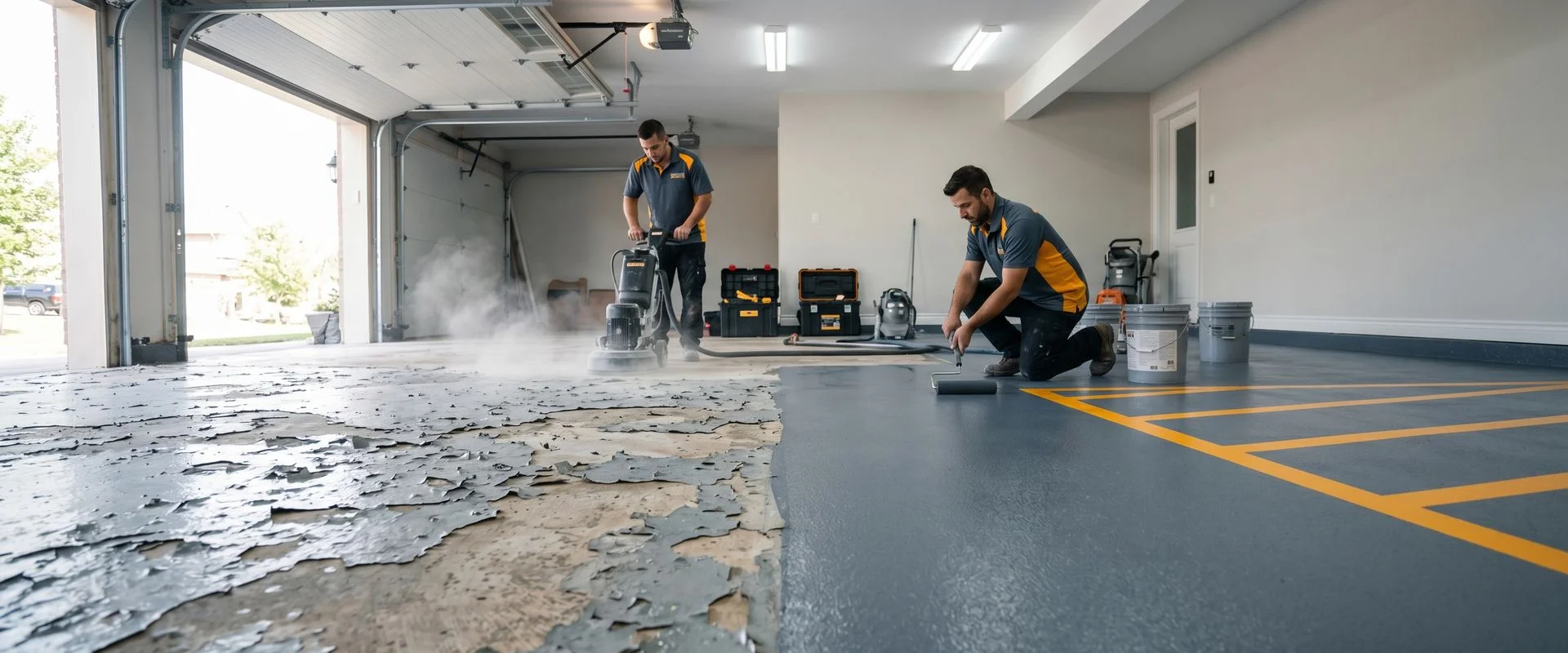
Epoxy Floor Repair & Recoat in Toronto, ON - Re-Grind and Restoration Professionals
Toronto Elite Epoxy Flooring diagnoses, repairs, and recoats failing epoxy floors on residential garages, basements, and commercial slabs throughout Toronto, ON. Every repair starts with a failure diagnosis - delamination, moisture bleed, peeling topcoat, or chemical breakdown - followed by mechanical diamond grinding to bare concrete, substrate crack and spall repair, moisture mitigation priming, and a fresh 100% solid epoxy base coat and polyaspartic topcoat.
Most epoxy floor failures in Toronto trace back to one of three causes: acid etching instead of diamond grinding leaves contaminated calcium salt residue that prevents mechanical bond; solvent-based coatings applied over moisture-positive slabs without ASTM F2170 testing delaminate as vapour pressure builds behind the film; and 40-60% solids waterborne systems shrink 30-50% on cure, creating a thin, brittle film that fractures under Ontario freeze-thaw cycling. A proper repair does not recoat over the failure - it mechanically removes the failed coating to bare concrete, identifies the root cause, and applies a 100% solid system over a correctly profiled CSP 3 surface.
Repair and recoat projects typically run 400-3,000 sq ft and complete in 1-2 days. Pricing ranges from $4 to $8 per sq ft installed depending on existing coating removal difficulty, substrate condition, and recoat system specification. Every recoated floor carries the same Warranty as a new installation - we don't offer patch-and-pray remediation.
Toronto Elite Epoxy Flooring provides epoxy floor repair and recoating to Toronto, ON and surrounding Ontario cities, including Etobicoke, Scarborough, North York, Mississauga, Oakville, Vaughan, Brampton, Markham, Richmond Hill, Ajax, and Pickering.
What is Epoxy Floor Repair & Recoat?
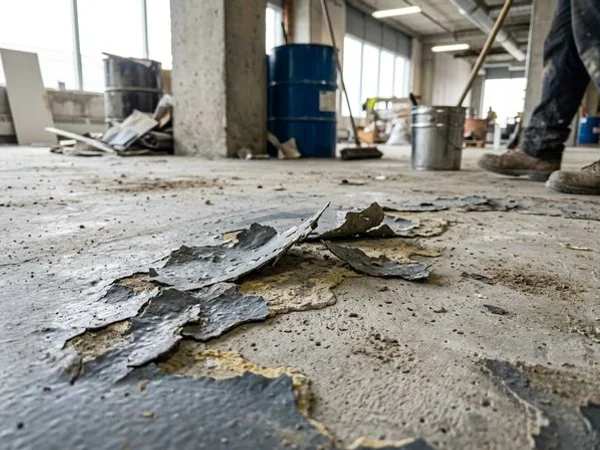
When an epoxy floor fails, it usually fails one of three ways: peeling at the edges, bubbling and lifting, or wearing through in high-traffic zones. The root cause is almost always one of three things - bad prep (acid-etched instead of diamond-ground), moisture vapour drive from below, or a budget solvent-based product that was the wrong call from the start.
We diagnose which one is happening, mechanically remove the failed coating, repair the substrate, and recoat with 100% solid commercial-grade epoxy. Done properly, the recoated floor carries the same Warranty as a fresh install from Toronto’s full-spectrum epoxy flooring contractor. Where the slab itself is damaged, the recoat starts with proper concrete repair and restoration before any new coating goes down.
We also offer anti-slip upgrades for floors that are otherwise sound but slippery - grit broadcast under a new traffic-resistant topcoat for commercial kitchens, medical facilities, and pool decks.
What’s Included
- Failure diagnosis (prep, moisture, or material)
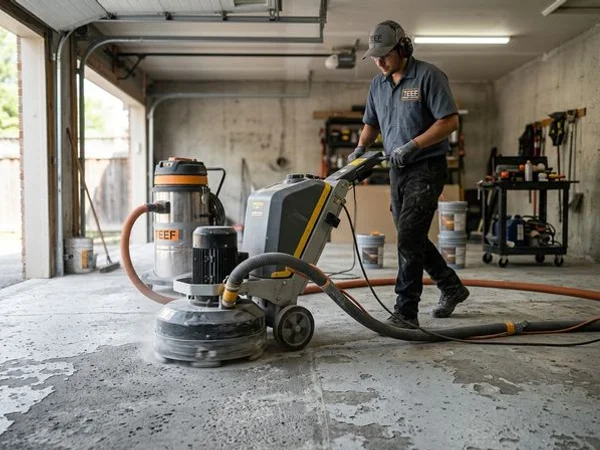
- Mechanical removal of failed coating via diamond grinding
- Substrate repair: crack stitching, spall patching, moisture mitigation
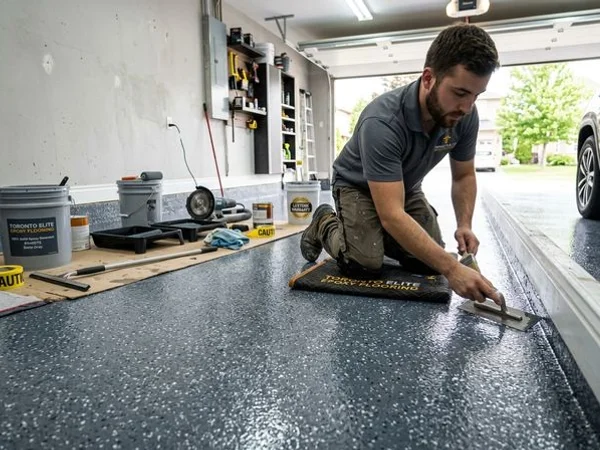
- Fresh 100% solid epoxy system installation
- Anti-slip grit broadcast upgrade option
- Warranty on the new system
- Documented before/after for your records
Why Epoxy Floors Peel and How We Fix Failed Installs
Delamination and peeling trace back to one of three failure modes, and each one requires a different corrective sequence. The first is inadequate surface preparation - specifically, acid etching rather than mechanical diamond grinding. Acid etching raises the concrete surface pH and leaves contamination in the pores, producing a surface profile far below the CSP 2-3 range that most 100% solid epoxy systems require for a permanent mechanical bond. Floors installed this way in older Scarborough and Etobicoke residential garages, where budget contractors are common, typically begin lifting at the edges within six to eighteen months of application.
The second failure mode is moisture vapour transmission. Toronto’s clay-heavy soil creates sustained hydrostatic pressure against below-grade slabs, particularly in North York and the Don Mills corridor where older slab construction dates to the 1960s and 1970s with no below-slab polyethylene vapour barrier. ASTM F2170 in-situ relative humidity probes frequently return readings above 85% RH on these slabs - well past the 75-80% threshold specified by commercial epoxy manufacturers. When a solvent-based or low-solid water-based coating is applied over a slab in this condition, vapour pressure builds behind the film and produces the characteristic blister-and-bubble pattern that many Etobicoke homeowners mistake for a product defect.
The third failure mode is material selection. Solvent-based epoxy paints sold at home improvement retailers typically contain 30-50% solids by volume. As solvents evaporate during cure, the dry film thickness drops to 2-4 mils - roughly one-tenth the 20-40 mil build of a commercial 100% solid system. That thin film has almost no structural resistance to abrasion or thermal cycling, and Ontario’s freeze-thaw cycles accelerate delamination further. The corrective process in all three cases starts with mechanical removal using a 10-inch or larger planetary grinder equipped with 16 or 30-grit PCD tooling, followed by ASTM F2170 moisture testing, substrate repair, a moisture-mitigating primer where readings exceed threshold, and a fresh 100% solid epoxy system as the base coat. We never apply a new coating over a failed one. The bond of the new system is only as reliable as the substrate it sits on.
When to Recoat vs Fully Replace an Epoxy Floor
The recoat-versus-replace decision comes down to four variables: the extent of delamination, the condition of the concrete substrate, the number of previously applied coating layers, and the client’s budget ceiling. A recoat - mechanical removal of the failed system, substrate repair, and fresh 100% solid application - is the right call when delamination covers less than roughly 30% of the total floor area and the concrete beneath shows no widespread spalling or structural cracking. In that scenario, a full recoat on a standard two-car garage in Ajax or Mississauga typically runs $1,800-$3,200 CAD, depending on the degree of substrate repair required, versus $3,800-$5,500 CAD for a complete strip-and-reinstall with a new decorative flake or quartz broadcast system.
Full replacement makes economic sense in two situations. The first is when the existing floor has received multiple coatings over the years - stacked layers of paint, solvent-based epoxy, and failed topcoats that add up to 15-25 mils of built-up film with poor intercoat adhesion throughout. Grinding through that stack is labour-intensive, and the substrate prep cost often approaches the cost of starting fresh. The second situation is a heavily spalled or scaled slab, where surface deterioration exceeds what crack stitching and spall patching can economically address. On slabs like this, particularly in older North York industrial units built before the 1980 National Building Code amendments that standardised slab reinforcement requirements, the correct path is a full skim coat of polymer-modified cementitious overlay to re-establish a flat, sound substrate, followed by a fresh system.
For floors that are structurally sound but showing surface wear - loss of gloss, fine abrasion scratches, or fading colour in high-traffic wheel paths - a topcoat recoat is a practical intermediate option. We scuff-sand the existing coating to CSP 1 using 60-grit abrasive, wipe with a solvent wash, and apply a fresh 100% aliphatic polyurea or polyaspartic topcoat at 3-5 mils DFT. Aliphatic polyurea, in particular, delivers superior UV stability compared to standard aromatic epoxy topcoats, which yellow within two to three seasons under direct sunlight in open garage and warehouse environments across the GTA. Topcoat-only recoats on a sound base typically run $4-$7 per square foot installed, making them the most cost-effective way to extend a floor’s service life by five to ten years before a full system replacement is warranted.
How We Diagnose a Failed Epoxy Floor Before Quoting a Repair
Most contractors who offer epoxy repair quote from photos or a quick walkthrough. We use a structured diagnostic process before any number is put on paper, because misdiagnosing the failure mode means the repair fails the same way as the original install.
The diagnostic starts with an ASTM F2170 in-situ relative humidity test. Two probes are drilled 40% through the slab depth and sealed for 24 hours. The reading tells us whether moisture vapour drive is an active factor or whether the failure was purely mechanical. Slabs in North York and East York from the 1960s and 1970s almost always return readings above 80% RH because they have no below-slab vapour barrier - this means a moisture-tolerant primer is mandatory, not optional, before any recoat. Skipping this test and applying a standard epoxy primer over a high-RH slab is how the same blister-and-bubble failure repeats within one winter.
The second diagnostic step is a pull-off adhesion test using a portable ASTM D4541 pneumatic dolly. We glue a 50mm aluminium disc to the failed coating, allow the adhesive to cure, and pull the disc off with a controlled force gauge. Readings above 200 psi at the concrete interface indicate the substrate is sound for a recoat. Readings below 150 psi, or failures that pull concrete aggregate with the disc, indicate the substrate itself is compromised and requires grinding back further than the coating delamination zone before a new system can bond reliably.
The third step is a scrape-and-probe inspection of delamination boundaries. Failed coatings rarely fail uniformly - there is typically a clearly defined perimeter where bonded and unbonded zones meet. We map this boundary across the floor and calculate the delamination percentage. If unbonded area covers more than 30% of the total floor, full strip-and-recoat is almost always more economical than attempting to address isolated patches. Below that threshold, mechanical removal of the failed zones and feathering the repair edges into the intact coating produces a result that is visually clean and structurally sound.
The diagnostic report - moisture readings, adhesion test results, and delamination map - is provided to the client before the quote, which means you understand exactly why the floor failed and what is being done to prevent the same outcome on the new system.
Related Questions Toronto Homeowners Ask
How do I know if my epoxy floor can be recoated or needs full replacement?
Pull up a corner of the existing coating and inspect the bond. If the epoxy breaks adhesively at the concrete interface rather than cohesively through the film, the substrate is likely sound enough for a recoat after mechanical re-grinding. If the concrete surface crumbles or pulls away with the coating, the slab itself is deteriorating and a full assessment - including ASTM F2170 moisture testing - is the right starting point before committing to any system.
How long does epoxy floor repair take in Toronto?
Most residential repair and recoat jobs complete in two days. Day one covers diamond grinding, substrate repairs, and the moisture-mitigating primer coat. Day two covers the 100% solid base coat and polyaspartic topcoat. A polyaspartic finish is walkable in 24 hours and ready for vehicle traffic in 72 hours. Larger commercial floors in Scarborough or Mississauga warehouses may require three to four days depending on floor area and the number of isolated spall repairs needed.
What does it cost to fix a peeling garage floor epoxy in the GTA?
A diagnosis, full mechanical re-grind, moisture mitigation primer, and 100% solid recoat on a two-car garage (400-500 sq ft) typically runs $1,800-$3,200 CAD depending on substrate condition. Anti-slip topcoat upgrades on a sound existing floor start around $600-$900 CAD for the same footprint. Floors with extensive spalling or multiple failed coating layers that require extra grinding time sit at the higher end of that range.
Can moisture in a Toronto slab be fixed before recoating?
Yes, and it must be addressed before any new coating goes down, or the same failure will repeat. We install a two-component moisture-mitigating epoxy primer formulated to tolerate slab RH up to 98% - products that chemically bond to concrete even under active vapour drive. For slabs with persistent hydrostatic pressure, we combine the moisture-mitigating primer with a negative-side crystalline waterproofing treatment applied to the slab perimeter. This is a common requirement in below-grade garages and basement floors across North York and Etobicoke.
Is an anti-slip upgrade safe for commercial kitchens and CFIA-regulated facilities?
Yes, provided the grit broadcast material and topcoat system are food-safe and meet the coefficient of friction requirements specified under CFIA facility standards. We use aluminium oxide broadcast aggregate under a 100% solid aliphatic epoxy or polyurea topcoat that is non-porous, seamless, and compatible with steam-cleaning and commercial sanitisers. Facilities in Mississauga and Ajax that process or store food products should specify NFPA 1 slip-resistance ratings during the scoping conversation so we can confirm the correct aggregate size and broadcast density for their traffic pattern.
Looking for a Toronto epoxy flooring contractor for a new installation rather than a repair? We cover the full GTA with 100% solid systems backed by a Warranty.
Our Epoxy Repair Results in Toronto
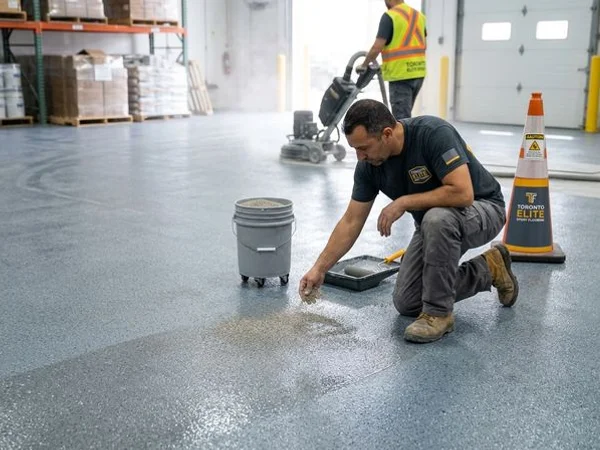
Why GTA Customers Choose Toronto Elite Epoxy Flooring for Epoxy Repair
Diagnosis First
We figure out the root cause before quoting - prep, moisture, or wrong material.
No Solvent-Based Materials
We recoat with 100% solid commercial-grade systems - never the budget products that failed.
Warranty on Recoats
Same warranty as a fresh install when we control the prep and product.
Anti-Slip Upgrades
If your existing floor is sound but slippery, we add grit broadcast under a new topcoat.
How Epoxy Repair Works
Failure Diagnosis
We figure out why the floor failed - prep, moisture, or wrong material - before quoting.
Re-Grind & Re-Prep
Mechanical removal of failed coating, full diamond-grind to a sound substrate.
Substrate Repair
Crack stitching, spall repair, moisture mitigation as the diagnosis requires.
Recoat With 100% Solids
Fresh 100% solid system with full warranty. Now it lasts.
Ready for a Free On-Site Assessment?
Same-day quotes across the GTA. WSIB-certified, $2M liability on every project.
What Customers Say About Our Epoxy Repair
"Previous contractor used solvent-based epoxy in our Etobicoke garage - failed within one winter. Toronto Elite did a full diamond grind to CSP 3, moisture test came back clean, and recoated with 100% solids. Warranty on file."
"Old failed floor in our basement. They diagnosed the moisture issue first, installed a vapour barrier, and recoated. No issues since."
"Honest assessment of why our old floor failed. Recoat has held up perfectly through two winters."
Epoxy Repair FAQs
Why is my epoxy floor peeling?
Usually one of three reasons: the prep was acid-etched instead of diamond-ground, moisture is pushing up through the slab (no vapour barrier), or the original product was a solvent-based budget epoxy. We diagnose which one is happening before we quote a fix.
Can you re-grind off a failed epoxy floor?
Yes. Mechanical removal with diamond grinders takes the old failed coating off and leaves a sound substrate for the new system. We don't paint over a problem.
Do you recoat with the same products?
No. We recoat with 100% solid commercial-grade epoxy - never the solvent-based budget products that are the most common cause of failure.
What's the warranty on a recoat?
Same Warranty as a fresh install, because we control the prep and the materials end-to-end.
Can you just add anti-slip to an existing floor?
Yes. If your existing coating is sound, we can add a grit broadcast under a new traffic-resistant topcoat - common for medical, commercial kitchen, and pool deck environments.
How much does epoxy floor repair cost in Toronto?
Repair pricing depends on the extent of failure and the square footage involved. A diagnostic assessment plus mechanical re-grind and full recoat on a standard two-car garage (roughly 400-500 sq ft) typically runs $1,800-$3,200 CAD using 100% solid commercial-grade systems. Anti-slip topcoat upgrades on a sound existing floor start around $600-$900 CAD for the same area.
How long does an epoxy floor repair take?
Most residential repair and recoat jobs in Toronto complete in two days: day one for mechanical removal, substrate repairs, and primer; day two for the finish coat. A polyaspartic topcoat allows foot traffic in as little as 24 hours after the final layer. Larger commercial projects in Scarborough or Etobicoke warehouses may run three to four days depending on floor size and the number of substrate repairs required.
Is repair or full replacement the right call?
If the concrete substrate is sound and delamination covers less than roughly 30% of the floor area, a re-grind and recoat is almost always the cost-effective path. Full replacement - stripping back to bare concrete and starting fresh with a new system - makes sense when the slab has widespread spalling, the existing coating is a thick build-up of multiple failed layers, or moisture emissions measured by ASTM F2170 exceed the system threshold.
What causes moisture-driven epoxy failure in Toronto specifically?
Toronto's clay-heavy soil in areas like North York and Scarborough creates seasonal hydrostatic pressure against basement and garage slabs. Many slabs poured before the 1990s have no below-slab vapour barrier, so moisture vapour drive is constant. When a solvent-based or water-based coating is applied without a moisture-tolerant primer, vapour pressure builds behind the film and causes bubbling and delamination within one to three winters.
Can you repair epoxy floors in occupied commercial buildings?
Yes. We schedule phased work in sections so your facility stays operational. Low-VOC 100% solid epoxy systems and aliphatic polyurea topcoats produce minimal off-gassing, which matters in occupied food-processing plants, medical clinics, and auto dealerships across Mississauga and Ajax. We provide WHMIS documentation on all materials used.
Will the repaired floor match the colour of the original?
An exact colour match to an aged floor is rarely possible, because existing coatings fade and discolour over time. We typically present two options: a full recoat that covers the entire surface for a uniform result, or a decorative broadcast system using flake or quartz aggregate that blends any visible transition. Most clients choose the full recoat for a clean, consistent finish.
What standard governs moisture testing before a recoat?
We follow ASTM F2170 for in-situ relative humidity testing using concrete probes, and ASTM F1869 calcium chloride testing where clients request both methods. Most 100% solid epoxy manufacturers specify a maximum slab RH of 75-80% before application. If readings exceed that threshold, we install a moisture-mitigating epoxy primer formulated to block vapour transmission before the finish system goes down.
Related Services
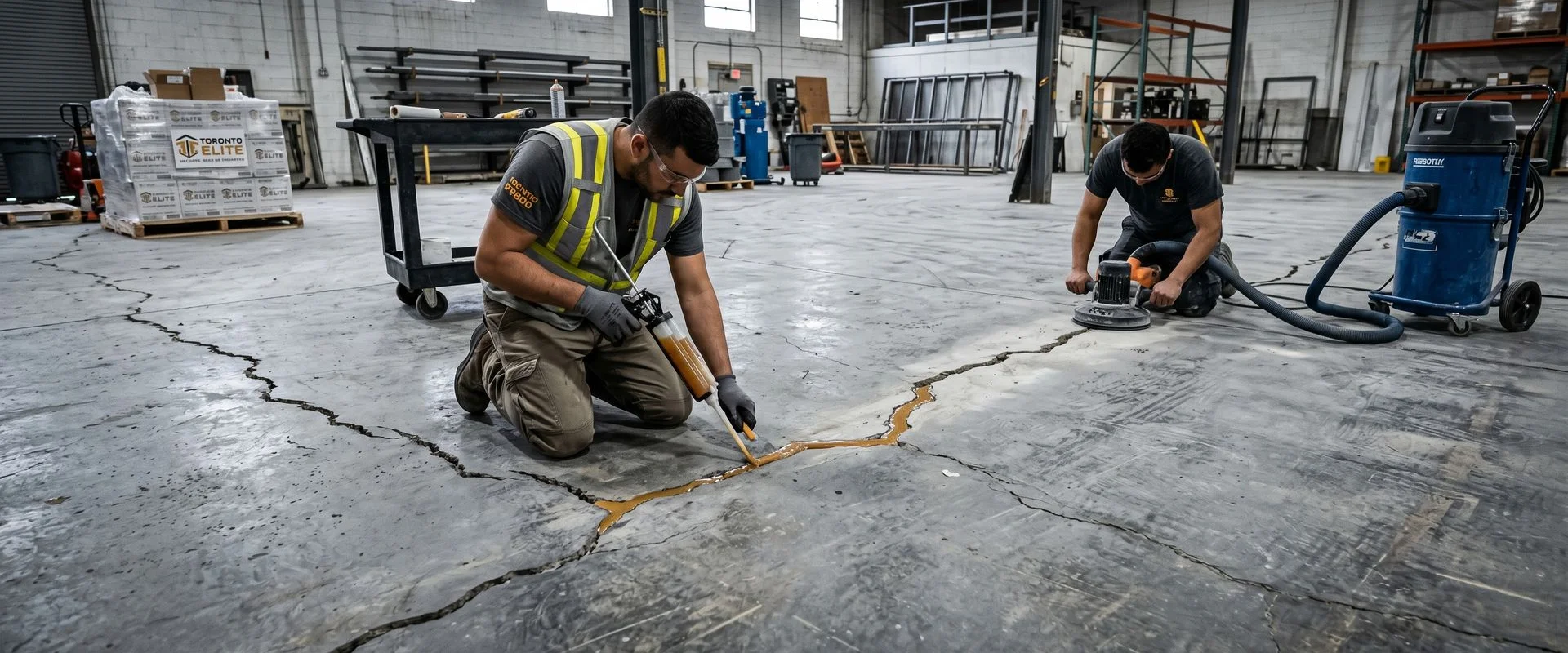
Concrete Repair & Restoration in Toronto, ON
Structural crack stitching, polyurea injection, spall patching, and self-levelling underlayment to restore any GTA concrete slab to a CSP 3 bondable surface before coating. Crack repair starts at $8-$18 per linear foot; slab resurfacing from $3 per sq ft. CSP 3 surface profile confirmed by grind gauge before any coating is applied.
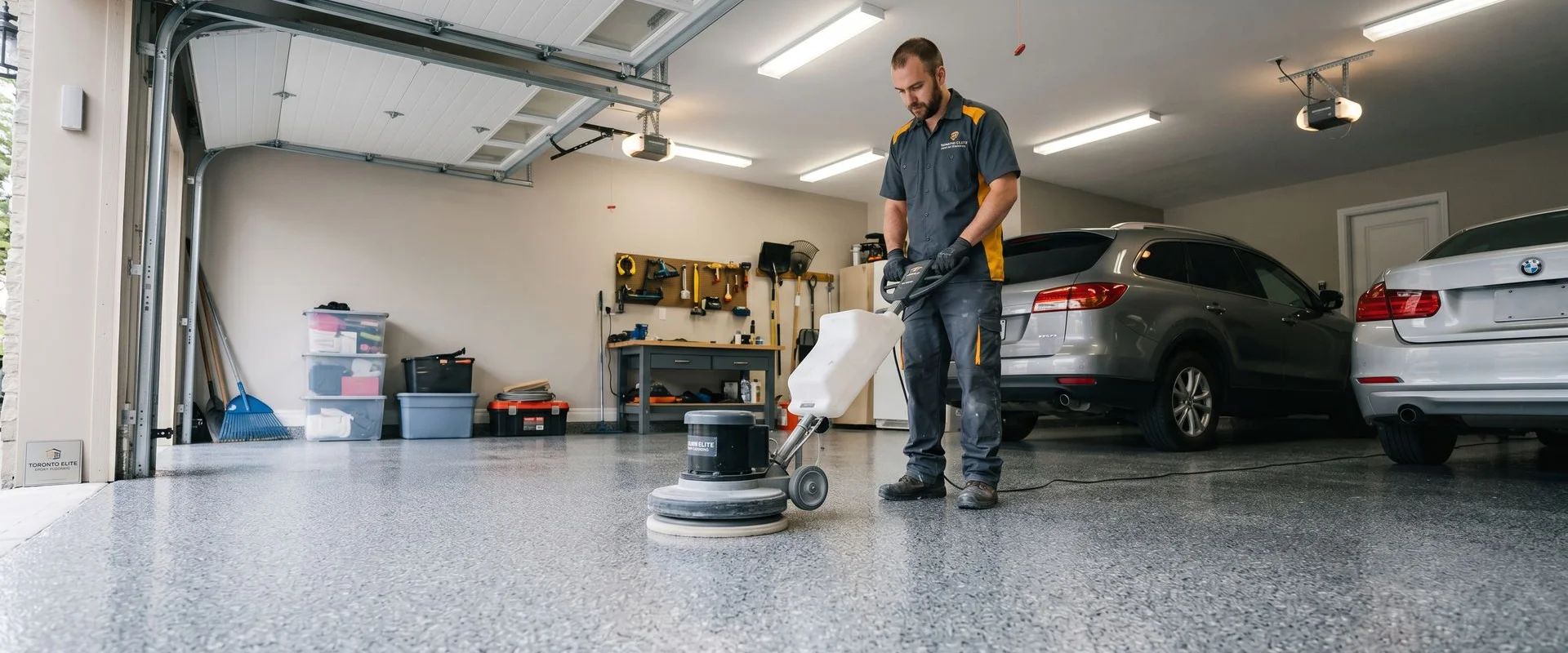
Garage Floor Epoxy in Toronto, ON
Diamond-ground to CSP 3 and moisture-tested before a 100% solid epoxy base, decorative quartz or metallic flake broadcast, and a UV-stable polyaspartic topcoat rated for Ontario road salt and hot-tire pickup. A 400 sq ft single-car garage runs $2,600-$4,000 installed and completes in 1-2 days. Every system includes anti-slip grit and WSIB-certified installation.
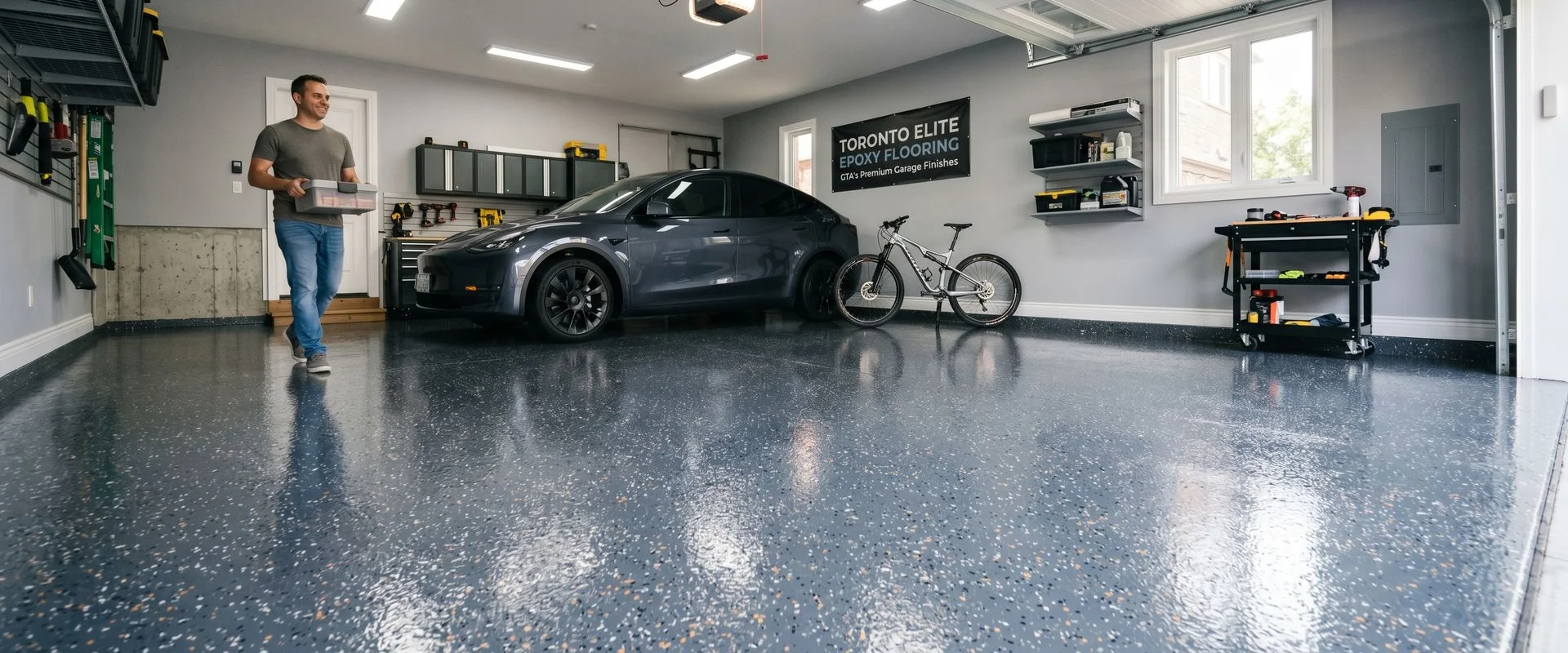
Polyaspartic Floor Coating in Toronto, ON
Fast-cure aliphatic polyaspartic floor coating returns most GTA garages to vehicle traffic within 24 hours - 4x harder than standard epoxy topcoats with full UV stability and cold-weather application down to -20°C. Pricing runs $3.50-$7 per sq ft installed; a standard 2-car garage completes in 1 day. WSIB-certified crews and liability coverage on every GTA install.
Ready to Book Epoxy Repair?
Same-day free on-site assessment. WSIB-certified, $2M liability on every project.