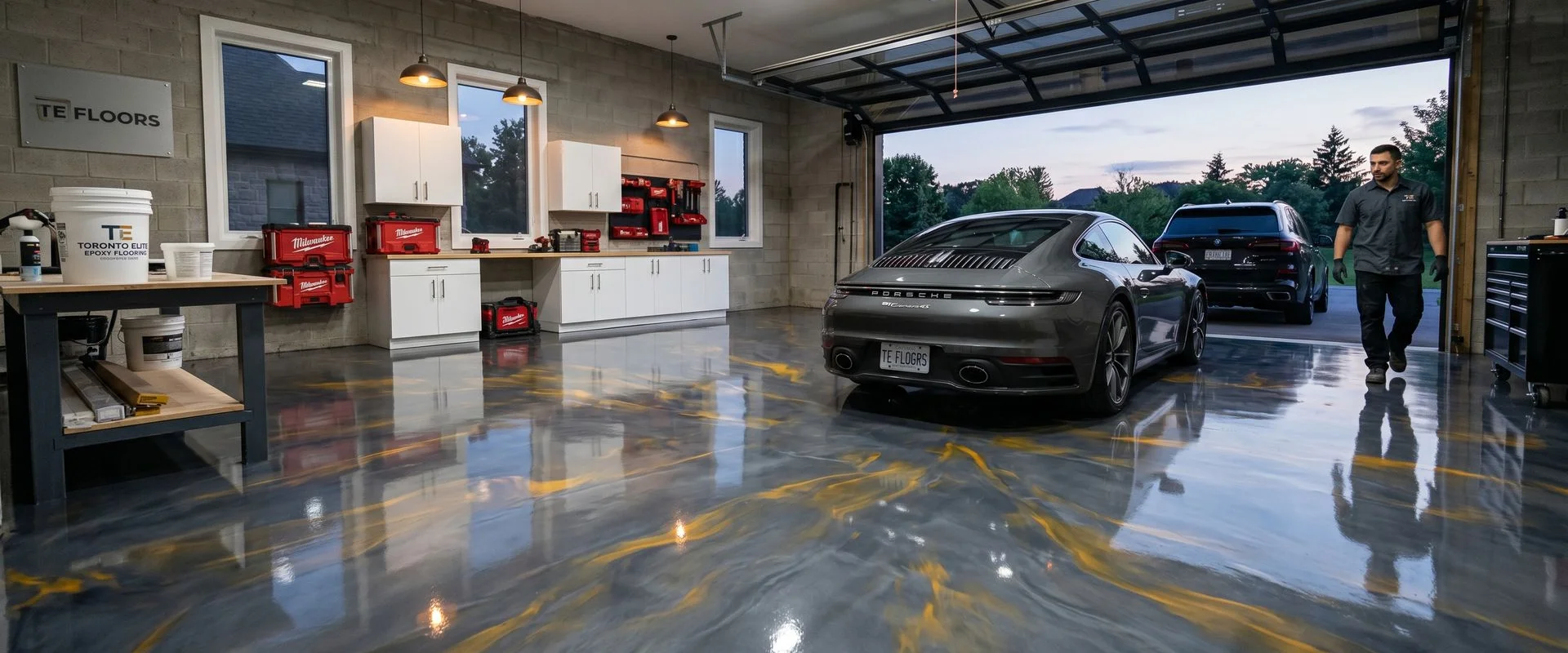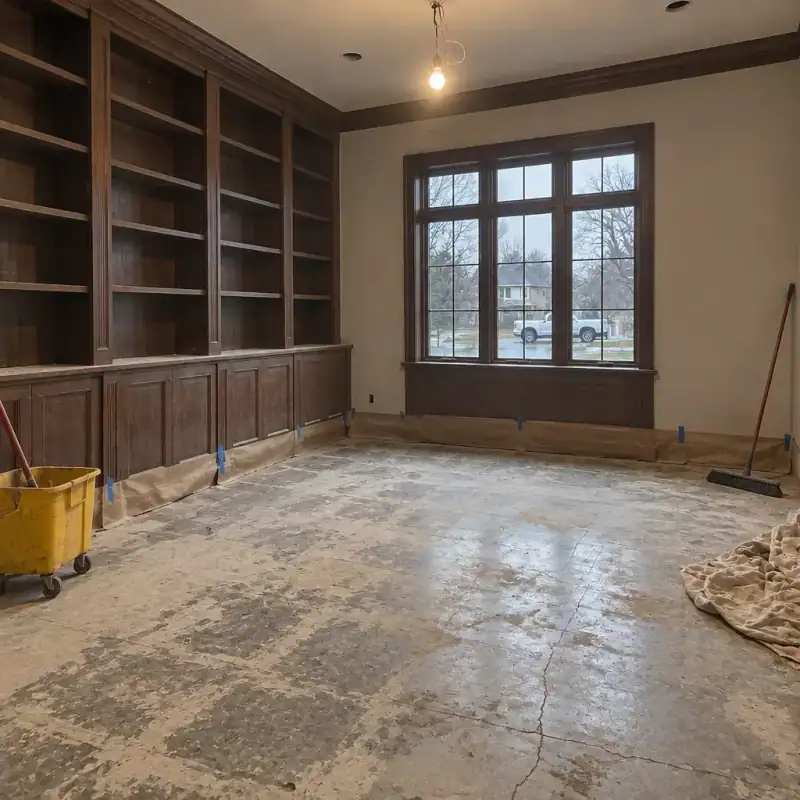
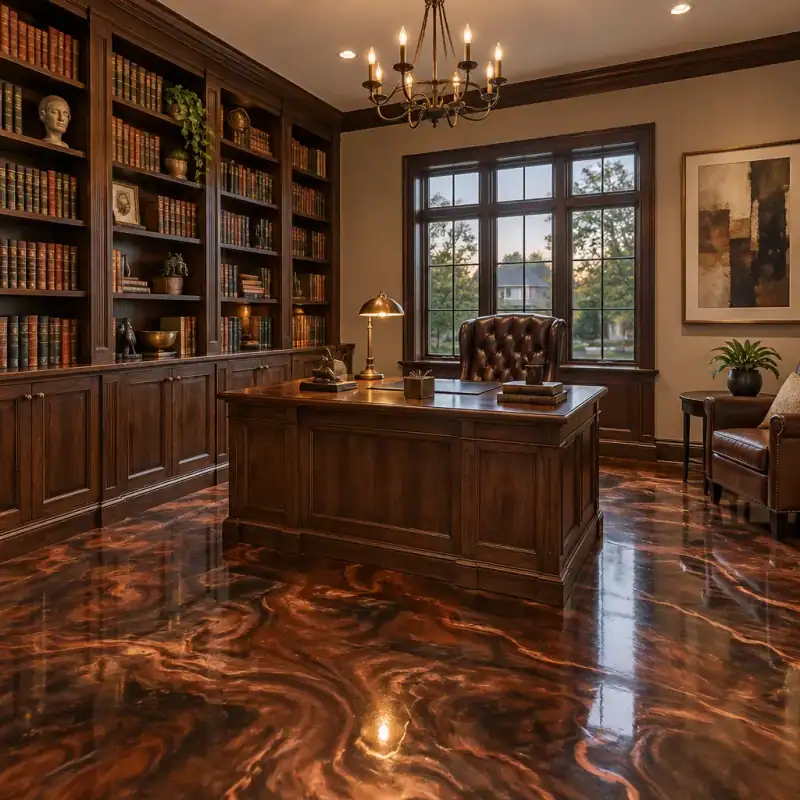
Toronto Elite Epoxy Flooring installs hand-manipulated 3D metallic pigment systems for Hamilton homeowners and loft retail owners across three distinct executive-finish markets. Ancaster and Flamborough escarpment-ridge executive estates take premium multi-pigment pours with custom BM / SW colour matching and specialty features like photoluminescent accent zones and integrated LED-channel lighting. Westdale and Dundas pre-war brick basements require reactive polyurea moisture barrier primer baseline before pigment work. Downtown Hamilton loft retail along James Street North and the King William urban-renewal corridor favours brushed-copper and warm-gold palettes on light grey bases that photograph well under retail LED. Every metallic install uses zero-VOC 100 percent solids chemistry under the pigmented layer and premium UV-stable aliphatic polyurea topcoat for 20+ year colour integrity.
Why Hamilton Metallic Spans Three Distinct Markets
Hamilton’s metallic epoxy market concentrates in three distinct executive-finish markets with different substrate and finish-spec requirements. Ancaster and Flamborough escarpment-ridge executive estates represent the premium multi-pigment market. Owners here want finished basement floor systems that match the quality of the main-floor stone and hardwood already in place. Baseline spec is CSP 2-3 diamond grind, 100 percent solids base, custom-matched metallic pigment with multi-pigment manipulation, premium aliphatic polyurea topcoat at 6 to 10 mils, and often specialty features like photoluminescent accents or integrated LED-channel lighting.
Westdale and Dundas pre-war brick basement conversions represent the heritage-stock market. These 1920s-1940s brick executives predate the Ontario Building Code requirement for sub-slab vapour barriers, which means every metallic install here requires reactive polyurea moisture barrier primer baseline. ASTM F2170 field readings on pre-1950 basements routinely sit at 85 to 95 percent in-slab RH, well above the moisture mitigation bracket threshold.
Downtown Hamilton loft retail along James Street North and the James-King-Hughson urban-renewal condo corridor represents the commercial metallic market. Boutique retail here specifies brushed-copper, warm-gold, and antique-bronze palettes on light grey bases that photograph well under 4000 to 6500K retail LED lighting. UV-stable aliphatic polyurea topcoat is mandatory because standard aromatic polyurethane topcoats yellow within 6 to 12 months under sustained retail LED exposure.
Our Hamilton Metallic Install, Step by Step
1. Executive Consult Plus Substrate Testing
Our Hamilton metallic site visit begins with a design consult where sample boards in real materials are presented in your actual basement or retail lighting environment. For Westdale, Dundas, and any pre-1970 property we install 72-hour ASTM F2170 relative-humidity probes. For downtown urban-renewal condo stock we run slab pH test and dust-wipe analysis for admixture residue. Custom pigment matching to Benjamin Moore or Sherwin-Williams codes handled at this stage, with Delta-E 2 colour-match tolerance available for interior-designer-specified palettes.
2. CSP 2-3 Diamond Grind Plus Moisture Primer and Millwork Protection
HEPA-shrouded planetary diamond grinders take the slab to CSP 2-3 with full millwork protection where executive estate basements have finished bar, home theatre, or wine cellar builds. Westdale and Dundas pre-war basements typically need 4 to 8 polyurea crack stitches per project. For pre-1970 slabs, a reactive polyurea moisture barrier primer applies at 8 to 10 mils dry film thickness.
3. Metallic Pour, Manipulation, Specialty Features, Premium Topcoat
The 100 percent solids zero-VOC epoxy mid-coat carries the custom-matched metallic pigment, cast into the wet base and hand-manipulated to develop three-dimensional movement. Specialty features (photoluminescent accents, LED-channel lighting zones, pigment transition blends, custom logo inlays) are integrated into the pour sequence at this stage. The system is sealed under a premium aliphatic polyurea topcoat at 6 to 10 mils for 20+ year colour integrity.
Hamilton coverage note: Our crew runs the Red Hill Valley Parkway, Lincoln Alexander Parkway, Highway 403, and the QEW corridors daily, hitting Ancaster, Westdale, Dundas, Mountain, downtown, and Stoney Creek within the same work day. Flamborough rural estates on scheduled dispatch.
Standard turnaround for a single-colour 400 sq ft Hamilton metallic install is 2 days. Multi-pigment Ancaster executive wine cellars or Dundas heritage conversions with custom matching and specialty features run 3 to 5 days. Pre-war Westdale or Dundas basements with moisture barrier primer upgrade add 1 to 2 days for cure. Written quote within 48 hours of the site assessment with sample boards and custom-match testing presented at the visit.
hamilton Metallic Epoxy Pricing
| Project Size | Price Range (CAD) | Timeline |
|---|---|---|
| Single-colour metallic (400 sq ft) | $3,500 - $5,200 | 2 days |
| Multi-pigment 3D pour (500 sq ft) | $6,500 - $9,500 | 2-3 days |
| Ancaster executive wine cellar / theatre | $8,500 - $16,500 | 3-4 days |
| Custom BM / SW colour match (Delta-E 2) | Add $1,200-$2,800 project | Same install window |
| Pre-war moisture barrier primer upgrade | Add $1.80-$3.00/sq ft | +1-2 day cure |
Serving These hamilton Neighbourhoods
Common hamilton Metallic Epoxy Questions
What makes Hamilton metallic installs different from GTA executive-market work?
Hamilton metallic pricing sits roughly 10 to 15 percent below equivalent Oakville or Ancaster-adjacent GTA executive-market installs for two reasons. First, Hamilton's substrate conditions in the executive escarpment-ridge communities (Ancaster, Flamborough, Dundas) are generally cleaner than lakefront GTA properties, which keeps the moisture mitigation upgrade spec optional rather than mandatory on most sites. Second, scheduling density is higher in Hamilton because our crew runs the Red Hill Valley Parkway and Lincoln Alexander Parkway corridors between Ancaster, Mountain, Stoney Creek, and downtown within the same work day. The exception is Westdale and Dundas pre-war brick stock, where original slabs without sub-slab vapour barriers push the moisture barrier primer upgrade spec from optional to mandatory. These pre-war projects price closer to GTA executive-market levels.
Can metallic go over Westdale pre-war brick basements?
Yes, with mandatory moisture barrier primer baseline. Westdale brick stock from the 1920s to 1940s and the Dundas heritage village core predate the Ontario Building Code requirement for sub-slab vapour barriers. The original slabs were poured directly onto compacted fill or crushed stone with no polyethylene barrier. ASTM F2170 field readings on pre-1950 Hamilton basements routinely sit at 85 to 95 percent in-slab relative humidity, well into the reactive polyurea moisture barrier bracket. Our Westdale and Dundas metallic protocol includes 72-hour F2170 testing, reactive polyurea moisture barrier primer at 8 to 10 mils dry film thickness, 100 percent solids base coat, custom-matched metallic pigment with multi-pigment manipulation, and premium aliphatic polyurea topcoat at 6 to 8 mils. The upgrade adds $1.80 to $3.00 per sq ft and is what separates a 15-year metallic floor from a 2-year callback in pre-war basement stock.
What specialty features work well in an Ancaster executive metallic basement?
Executive estate basements in Ancaster and the Flamborough rural pockets regularly incorporate specialty features into the metallic install. Photoluminescent (glow-in-the-dark) accent zones around stairwell landings use strontium aluminate photoluminescent powder that charges under standard LED ambient lighting and emits a blue-green glow for 6 to 8 hours after lights-out, popular for wine cellars with staircase access and home theatre entry sequences. Integrated LED-channel lighting at perimeter wall junctions, cast into clear polyurea topcoat zones, creates floating-floor visual effects that work especially well in the vaulted-ceiling basements common in Ancaster executive stock. Pigment transition zones that blend one metallic palette into another across the floor plan allow multi-function basement spaces (bar/lounge/theatre/gym) to visually define zones without hard partition walls. All of these specialty features add 10 to 20 percent to the project cost and 1 to 2 days to the install timeline.
Related Services in hamilton
While we are on site in hamilton we also handle Basement Epoxy Flooring in Hamilton, Garage Floor Epoxy in Hamilton, Polyaspartic Floor Coating in Hamilton, and Commercial Epoxy Flooring in Hamilton. Same crew, same WSIB coverage, same written quote process.