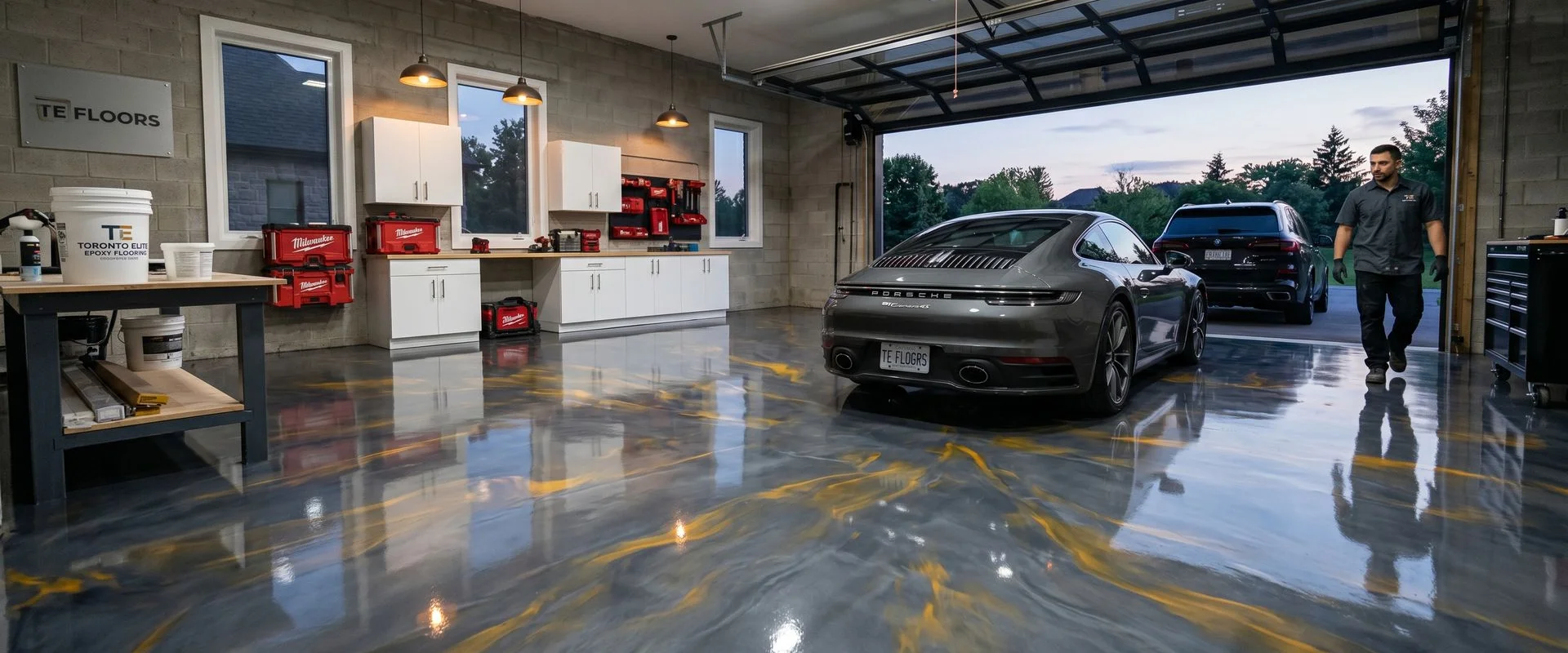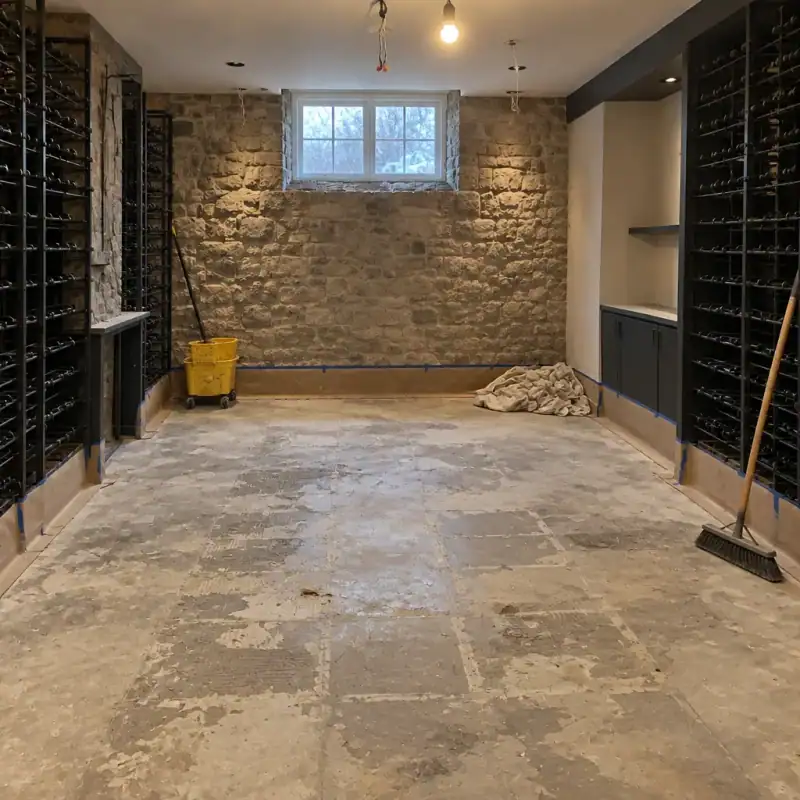
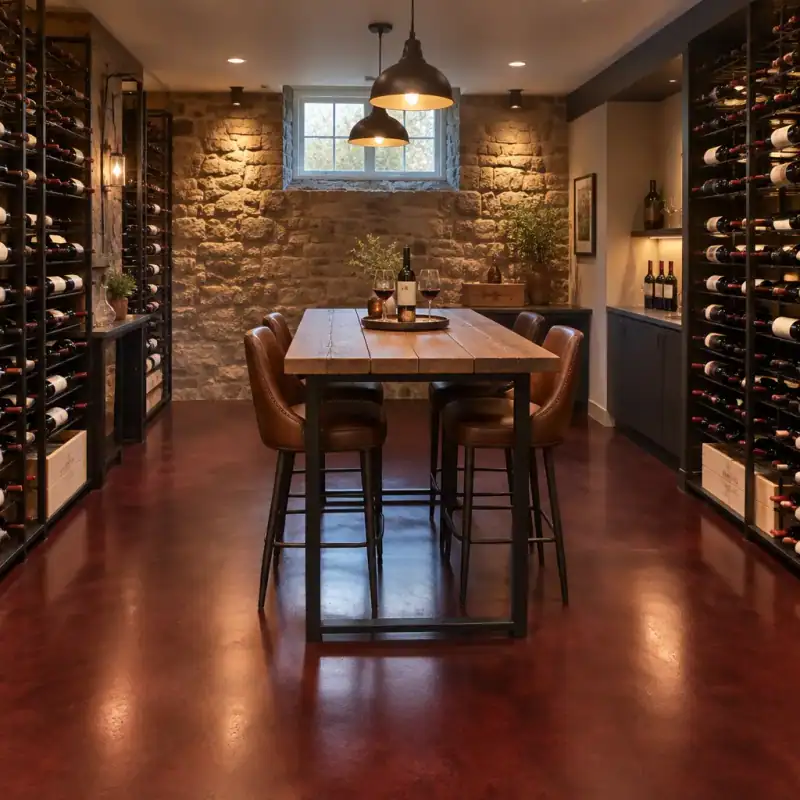
Toronto Elite Epoxy Flooring installs fast-cure aliphatic polyaspartic floor coating systems for Hamilton homeowners across three distinct substrate environments. Westdale and Dundas pre-war brick stock from the 1920s-1940s sit on original slabs without sub-slab vapour barriers and face Niagara Escarpment aquifer drive year-round, requiring reactive moisture mitigation primer baseline. Hamilton Mountain and Stoney Creek 1950s-1970s builder-grade stock faces QEW and Lincoln Alexander Parkway salt loading plus 50-to-70-year-old builder polyethylene vapour barrier degradation. Ancaster and Flamborough executive estates combine heated attached triple-car bays with escarpment-aquifer humidity, demanding premium polyaspartic chemistry at the thicker end of the application range. Every polyaspartic install includes CSP 3 diamond grinding, polyurea crack stitching, 100 percent solids base coat, broadcast quartz or metallic flake, and aliphatic polyaspartic topcoat with 24-hour return to vehicle traffic.
Why Hamilton Polyaspartic Earns Zone-Specific Spec
Hamilton polyaspartic installs split into three zones with distinct substrate conditions and finish-spec expectations. Ancaster and Flamborough escarpment-ridge executive estates expect finished garage floor systems that match the quality of the main-floor hardwood or stone they already have. Baseline here includes CSP 3 diamond grind, 100 percent solids base coat, decorative quartz or metallic flake broadcast under the polyaspartic topcoat, and polyaspartic sealed at 5 to 7 mils (thicker than our standard 4 to 5 mil spec) for extended service life. Premium specs often incorporate in-floor radiant heating compatibility, custom RAL colour matching to garage door or interior palette, and specialty features like photoluminescent accent zones around the entry sequence.
Westdale and Dundas pre-war brick stock from the 1920s-1940s predate the Ontario Building Code requirement for sub-slab vapour barriers. Original slabs here were poured directly onto compacted fill with no polyethylene barrier. Combined with Dundas Valley Conservation Area groundwater and the Niagara Escarpment aquifer drive, F2170 field readings routinely sit at 80 to 90 percent in-slab relative humidity. The reactive polyurea moisture barrier primer at 8 to 10 mils dry film thickness is mandatory baseline here, not an optional upgrade.
Hamilton Mountain and Stoney Creek 1950s-1970s builder-grade stock sits in the standard mitigation bracket. Builder polyethylene sub-slab vapour barriers are now 50 to 70 years old and showing degradation. QEW, Red Hill Valley Parkway, and Lincoln Alexander Parkway salt corridor exposure from November through March adds chloride loading on tires. F2170 readings here typically sit at 75 to 85 percent RH, in the moisture mitigation primer bracket.
Our Hamilton Polyaspartic Install, Step by Step
1. Zone Assessment Plus Substrate Testing
Our Hamilton polyaspartic site visit begins with a zone assessment, mapping your property to its substrate zone (Ancaster/Flamborough executive, Westdale/Dundas pre-war, Mountain/Stoney Creek post-war) and documenting slab condition. Pre-war and escarpment-ridge properties get a 72-hour F2170 relative-humidity probe install. Downtown urban-renewal condo stock gets slab pH test and admixture dust-wipe analysis. For Ancaster executive installs, premium finish options (decorative metallic flake, custom RAL matching, in-floor radiant compatibility) are discussed in your actual garage lighting environment.
2. Diamond Grind to CSP 3 Plus Moisture Primer
HEPA-shrouded planetary diamond grinders take the slab to CSP 3 with full millwork protection where executive garages have finished bench or storage builds. For pre-1970 slabs and any escarpment-ridge property within one kilometre of the escarpment face, a reactive polyurea moisture barrier primer applies at 8 to 10 mils dry film thickness.
3. Base Coat, Broadcast, Premium Polyaspartic Topcoat
100 percent solids epoxy base coat applies at 12 to 16 mils wet film thickness (10 to 12 mils for in-floor radiant-compatible systems). Broadcast quartz, vinyl flake, or decorative metallic chip to full coverage refusal. Premium aliphatic polyaspartic topcoat sealed at 5 to 7 mils for Ancaster executive bays, standard 4 to 5 mils for Mountain and Stoney Creek installs, with anti-slip grit broadcast per use case. Return to vehicle traffic within 24 hours.
Hamilton polyaspartic coverage note: Our crew runs the QEW, Red Hill Valley Parkway, Lincoln Alexander Parkway, Highway 403, and Centennial Parkway corridors daily, hitting Westdale, downtown, Mountain, Stoney Creek, Ancaster, and Dundas within the same work day. Flamborough rural estates on scheduled dispatch. Cold-weather installs available Nov-Mar with supplemental heat.
Standard polyaspartic install for a double-car Hamilton garage runs 1 to 2 days with 24-hour return to vehicle traffic. Ancaster executive triple-car with premium metallic finish runs 2 days. Westdale and Dundas pre-war bays with moisture upgrade spec add 1 day for cure. Written quote within 48 hours of the site assessment.
hamilton Polyaspartic Pricing
| Project Size | Price Range (CAD) | Timeline |
|---|---|---|
| Double-car garage (800 sq ft) | $5,200 - $7,800 | 1-2 days install |
| Executive triple-car Ancaster (1,200 sq ft) | $8,000 - $12,500 | 2 days install |
| Premium metallic flake upgrade under polyaspartic | Add $2.00-$3.50/sq ft | +1 day |
| Pre-war moisture-rated chemistry upgrade | Add $1.80-$2.80/sq ft | +1 day cure |
| In-floor radiant-compatible polyaspartic system | Add $1.80-$2.80/sq ft | Same install window |
Serving These hamilton Neighbourhoods
Common hamilton Polyaspartic Questions
Why does Hamilton polyaspartic pricing vary so much by zone?
Three substrate zones drive Hamilton polyaspartic pricing variation. Ancaster and Flamborough executive estates on the escarpment ridge spec premium chemistry at the thicker end of the application range (5 to 7 mils vs standard 4 to 5 mils) for extended service life matching the executive residential context, with decorative metallic flake broadcast near-standard. Westdale and Dundas pre-war brick stock from the 1920s-1940s predate sub-slab vapour barrier requirements, which forces moisture barrier primer baseline on every install. Hamilton Mountain and Stoney Creek post-war bungalow stock sits in the standard mitigation bracket (moderate F2170 readings, QEW and Lincoln Alexander Parkway salt corridor exposure). The result is three distinct price points: standard Mountain/Stoney Creek, pre-war Westdale/Dundas with moisture upgrade, and executive Ancaster/Flamborough with premium finish spec.
Can polyaspartic install over Westdale or Dundas pre-war slabs?
Yes, with mandatory moisture barrier primer baseline. Westdale brick stock from the 1920s to 1940s and the Dundas heritage village core predate the Ontario Building Code requirement for sub-slab vapour barriers. The original slabs were poured directly onto compacted fill or crushed stone with no polyethylene barrier. ASTM F2170 field readings on pre-1950 Hamilton garages routinely sit at 80 to 90 percent in-slab relative humidity, well into the reactive polyurea moisture barrier bracket. Our Westdale and Dundas polyaspartic protocol includes 72-hour F2170 testing, reactive polyurea moisture barrier primer at 8 to 10 mils dry film thickness, 100 percent solids base coat, broadcast quartz or metallic flake, and premium aliphatic polyaspartic topcoat. The upgrade adds $1.80 to $2.80 per sq ft and is non-negotiable on pre-1950 heritage stock.
Do you handle in-floor radiant-compatible polyaspartic systems?
Yes. Ancaster executive heated garage conversions regularly incorporate in-floor radiant heating under the finished floor, and polyaspartic chemistry is compatible with radiant systems provided the install is coordinated with the radiant specification. Our in-floor radiant-compatible polyaspartic scope includes thermal transfer verification before coating (ensuring the base coat doesn't act as an insulating layer that reduces radiant efficiency), slow-ramp cure protocol for the initial week after install (radiant brought up to operating temperature gradually to avoid thermal shock to the newly cured topcoat), and a thinner-than-standard base coat film-build at 10 to 12 mils to optimize heat transfer. The upgrade adds $1.80 to $2.80 per sq ft and does not extend the install window.
Related Services in hamilton
While we are on site in hamilton we also handle Garage Floor Epoxy in Hamilton, Basement Epoxy Flooring in Hamilton, Decorative Metallic Epoxy in Hamilton, and Commercial Epoxy Flooring in Hamilton. Same crew, same WSIB coverage, same written quote process.